
The 1% Rule in 2026: Where It Still Works, and Where It's a Memory
The 1% rule is dead in most coastal metros and alive in Midwest river towns. Here's the math behind the screen, and where the ratio actually clears.
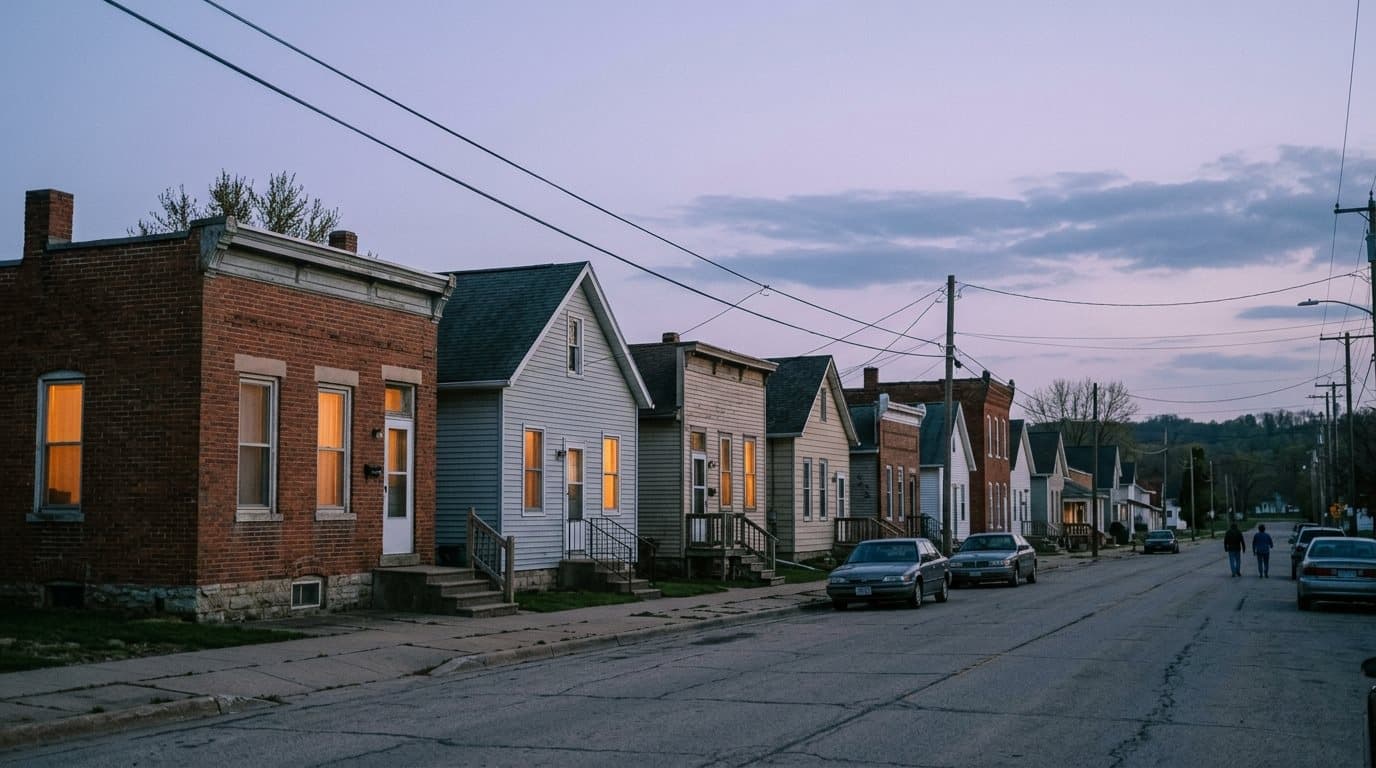
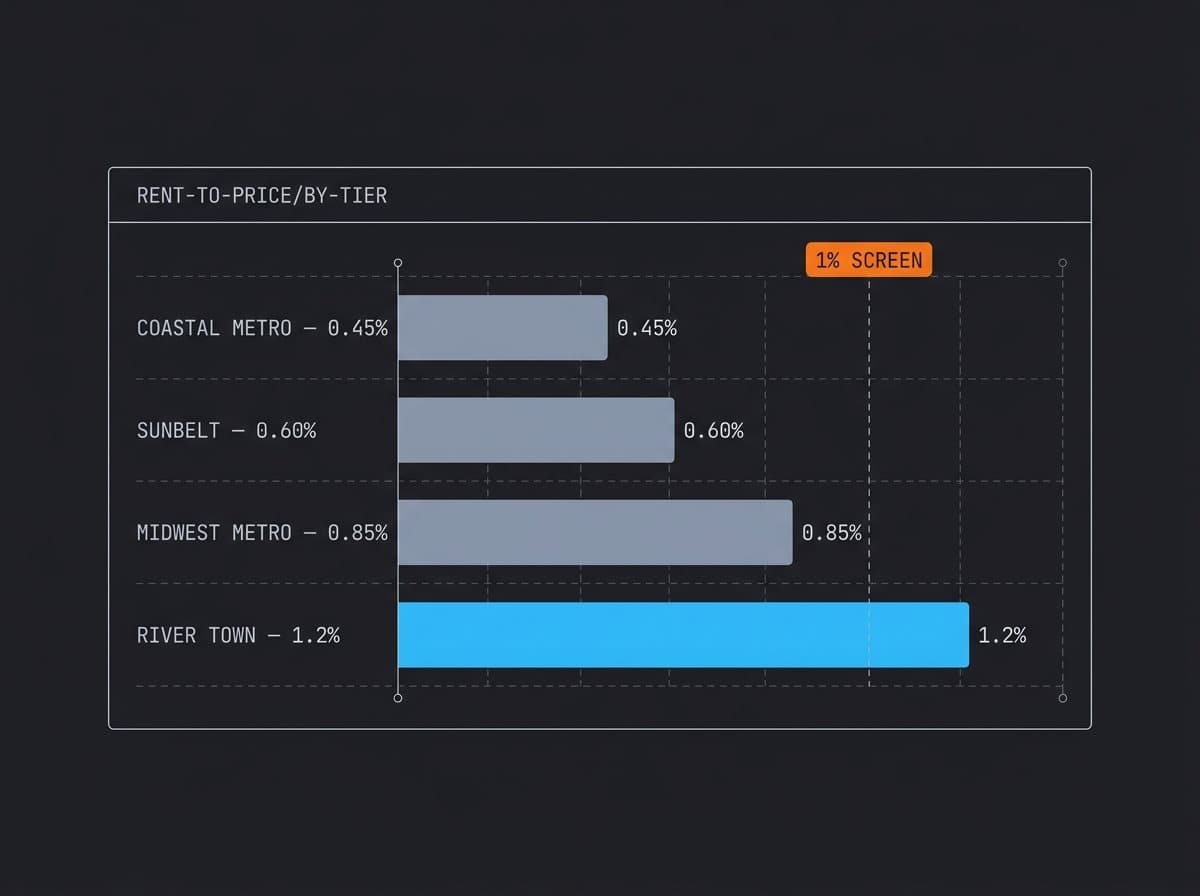
The 1% rule — monthly rent of at least 1% of the purchase price — still works in 2026, but only as a screen, and only in markets where prices never detached from rents. In most coastal and Sunbelt metros it now functions as a "do not buy here" sign. In Midwest river towns it's still ordinary arithmetic.
What the rule actually is
The 1% rule is a thirty-second filter: a $90,000 property should rent for at least $900 a month before it deserves a deeper look. It isn't a return metric. It says nothing about taxes, insurance, condition, or who your tenant will be. What it does, brutally well, is sort markets into "the math can work" and "the math can't."
A property renting at 1% of price grosses 12% of its cost annually before expenses. Run the typical operating load against that and a sensibly financed deal can still produce real yield. At 0.5% — the ratio most retail listings in expensive metros screen at — the same expense load eats everything, and the investment becomes a bet on appreciation wearing a rental costume.
Why the rule "died" — and where it didn't
The rule didn't die everywhere at once. It died where home prices inflated faster than rents for a decade: the coasts first, then the Sunbelt boomtowns that absorbed the 2020–2022 migration wave. When a $400,000 house rents for $2,200, the screen reads 0.55% and no financing structure rescues it.
It survived where prices stayed tethered to local incomes. Small Midwest markets never had a speculative run-up, so they never had a ratio collapse. The same is true across much of the small-town Midwest generally — and it's why national coverage keeps "discovering" Cleveland, Memphis, and Indianapolis every cycle.
Representative screening ratios by market tier, 2026
How to use the screen without fooling yourself
1. Screen on real rent, not hoped-for rent
Use actual comparable rents for the property's condition and street — not the best unit in town. If the number only clears 1% with a rent nobody on that block pays, it doesn't clear.
2. Adjust the bar for your financing
At 2026 rates, many investors screen at 1.1–1.2% so the deal still breathes after debt service and management. A disciplined acquisition basis matters more than the headline ratio: the same house clears easily at a $76,000 basis and fails at $105,000.
3. Respect what the rule can't see
Property taxes, insurance on older stock, and tenant quality all live outside the ratio. A 1.3% property with a collapsing sewer lateral is worse than a 1.0% property that was renovated properly. The screen earns a deeper evaluation; it never replaces one.
4. Be suspicious of 2%+
Ratios far above 1.5% usually price in something — a block with no tenant demand, a structure with deferred failures, or a rent figure from imagination. Outliers are diligence flags, not jackpots.
How Pando handles this
We don't evaluate to a slogan — the ratio is one input among the eleven criteria in our buy-box, and the basis is where we make it true. Because acquisitions start distressed and transfer after renovation at a price below comp value, the rent-to-price math on a Pando deal is set at purchase, not wished into the pro forma. Across closed deals, transfer prices have penciled above the 1% screen with real, in-place comparable rents — in the same Iowa river-town markets where the ratio never left. The Midwest-vs-Sunbelt comparison makes the same point with a wider lens.
FAQ
Does the 1% rule still work in 2026? As a screen, yes — in markets where prices stayed tied to incomes. Midwest river towns still clear it routinely; most coastal and Sunbelt metros don't.
Is clearing 1% the same as a good deal? No. It earns the property a full evaluation. Condition, taxes, insurance, and tenant base decide the rest.
Should the bar be higher than 1% now? Many investors screen at 1.1–1.2% to absorb today's financing and management costs. Basis discipline gets you there more reliably than market hunting.
Why does the Midwest still hit the ratio? No speculative price run-up, steady rental demand for decent housing, and renovated single-family stock in the $70K–$90K range renting at $850–$1,100.
Next step
See how our deals are evaluated and priced — or request access and screen a live transfer price against the rule yourself.
See the discipline in practice.
Vetted investors get first look at every deal Pando announces — evaluation numbers, not marketing numbers.
The console has read this article. Ask for the short version, the main points, or anything it raised.


