
How to Grade a Block: Reading C-Class Neighborhoods Honestly
Letter grades hide more than they reveal. How to actually read a working-class block — the owner signals, the decay signals, and the street-level method.
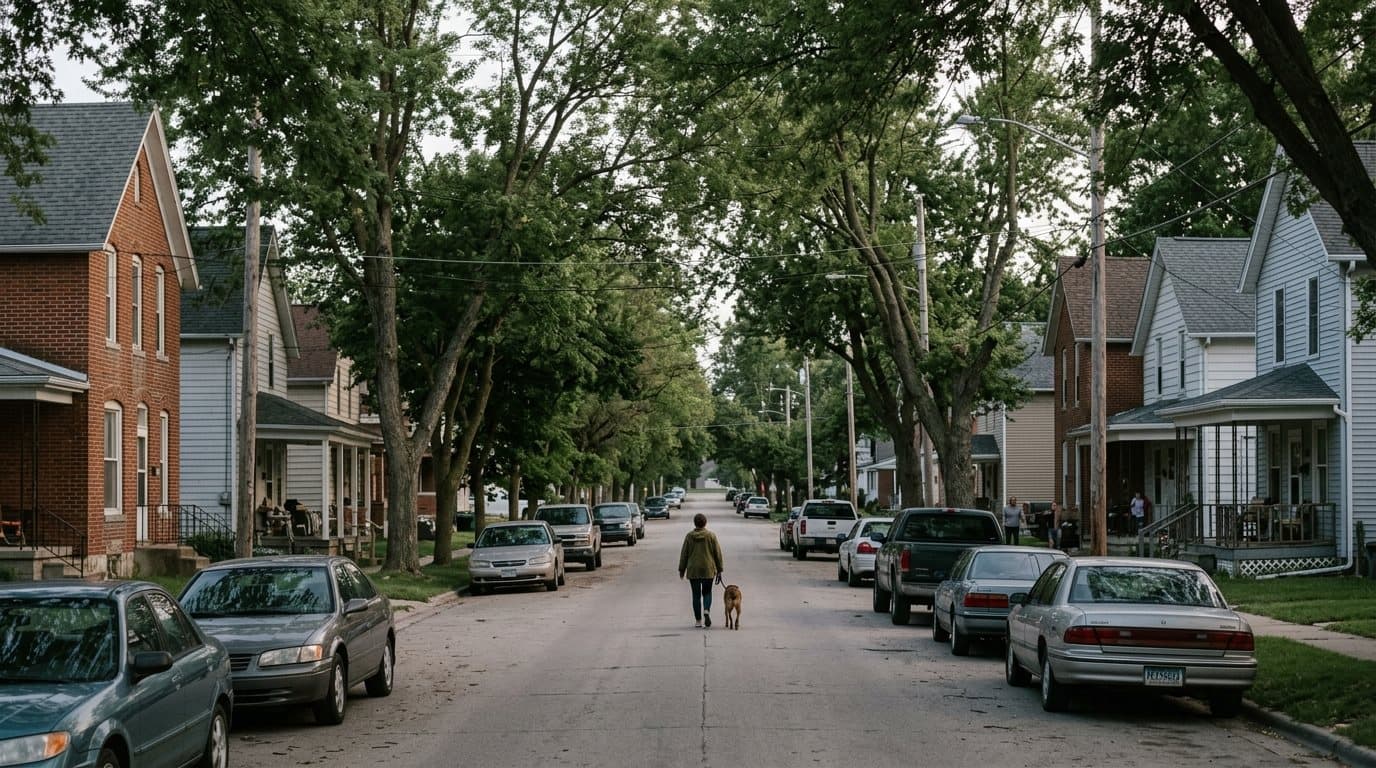
Letter grades describe averages; you're buying one street. A "C-class" block can be the most reliable yield in residential real estate or a slow-motion loss — and the letter can't tell you which. The street can: occupancy, maintenance trajectory, and ownership mix are all readable, even from a thousand miles away.
What the letters actually encode
The A/B/C/D shorthand maps income and stock age: A is executive, B is comfortable, C is working-class with older stock, D is distressed. The investing folk wisdom — "A for appreciation, C for cash flow" — is roughly true and dangerously incomplete, because class C covers the widest range of outcomes of any letter.
Most of the housing stock in Midwest river towns grades C by national rubrics: 1890–1940 construction, modest incomes, high renter share. That's precisely where sub-$100K math works — and where the trap version of the same property lives two streets over. The whole game is block-level discrimination.
Stable-C vs declining-C
The two blocks can sit four hundred yards apart and look identical in a listing photo. The differences are longitudinal:
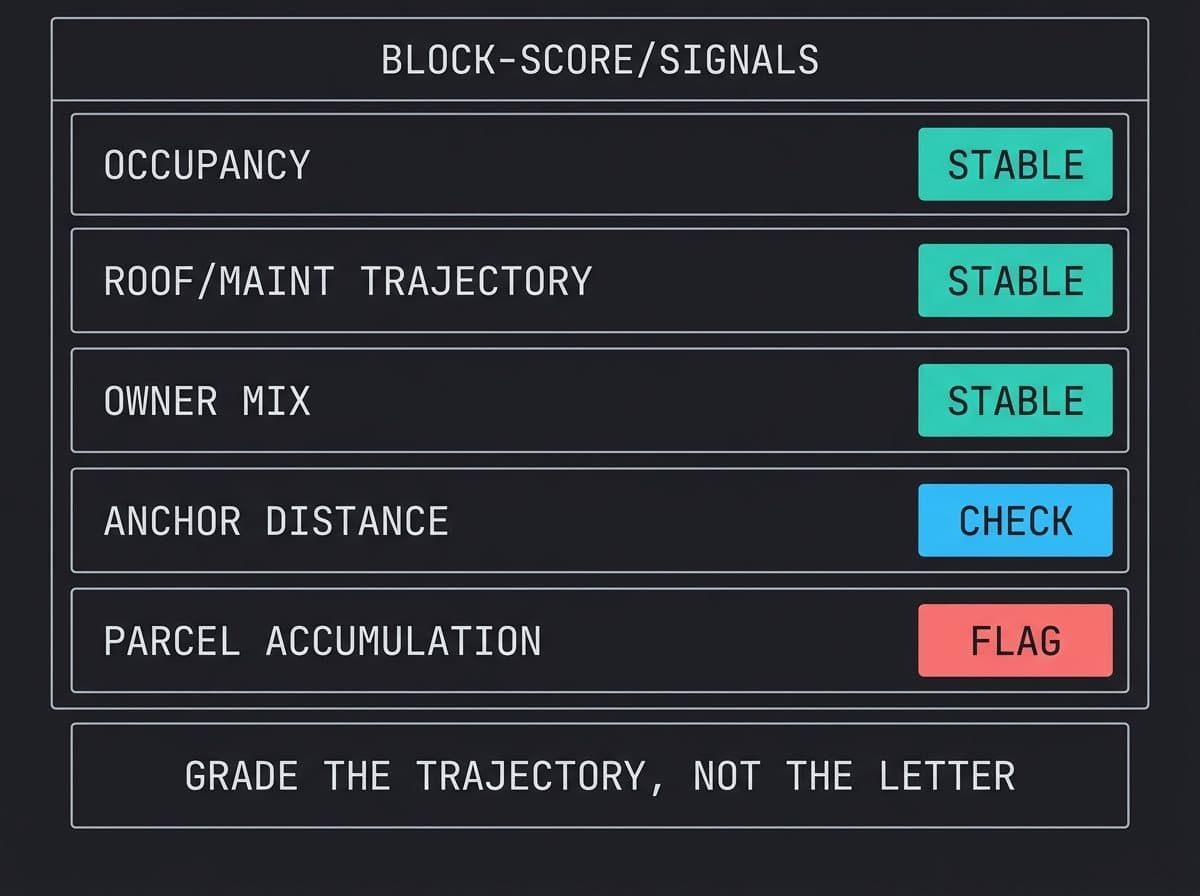
Stable-C signals. Full occupancy. Roofs replaced on schedule — you can read roof age from imagery. Kept yards, running vehicles, school-age kids' equipment. A mix of long-tenured owner-occupants and small local landlords. Modest, continuous reinvestment: new windows here, fresh siding there.
Declining-C signals. Visible vacancy that persists across imagery years. Tarps that became the roof. Parcels accumulating in one distant owner's name. No new investment by anyone — the telling absence. Rents that look high for the price are usually compensating you for this trajectory.
A block's direction is invisible in one snapshot and unmistakable across five years of imagery. Decline and recovery both leave a visual record.
The grading method
1. Walk the block in time, not just space
Street-view every property — both sides, the alley if imaged — across every available imagery year. You're grading the derivative: is this block getting better, holding, or slipping?
2. Map the ownership
County assessment records show who owns what. Owner-occupants and small local landlords signal stability; scattered out-of-state specs and one entity hoarding vacant parcels signal the other thing.
3. Find the anchor
Stable working-class blocks usually have one: proximity to the hospital, the school, the plant, the river industry — the employer whose workforce is the tenant base. A block with an anchor institution within walking distance has a floor under it.
4. Get the local read
Ask a property manager who places tenants in that town to grade the street. They know which blocks they'll work and which they won't, and their refusal list is the most honest neighborhood data that exists.
5. Price the trajectory, not the snapshot
A stable-C house at full price beats a declining-C house at a discount — the discount is the market correctly pricing the trajectory you'd be buying.
How Pando handles this
Pando's buy-box evaluates the block before the building — a property that passes every structural test on a failing street fails the evaluation. We grade with the method above plus what remote buyers can't easily get: our crews and managers work these streets and know which blocks hold. Deal pages state the read plainly — anchor institutions, ownership pattern, occupancy — so you can re-run the grading yourself from the same public records we used. The letter never appears; the evidence does.
FAQ
What's a C-class neighborhood? Working-class blocks, older stock, modest incomes — a label spanning everything from the best yield streets in America to blocks in real decline.
Are they good investments? Stable-C blocks are often the strongest math in residential rentals. The work is telling stable from declining, street by street.
How do I grade a block remotely? Multi-year street view, county ownership records, and a local property manager's honest read.
Top red flags? Persistent vacancy, permanent tarps, one distant entity accumulating parcels, and zero visible reinvestment.
Next step
See how block quality enters Pando's evaluation — or request access and re-grade a live deal's street from the records yourself.
See the discipline in practice.
Vetted investors get first look at every deal Pando announces — evaluation numbers, not marketing numbers.
The console has read this article. Ask for the short version, the main points, or anything it raised.


