
Who Rents in a Town of 10,000? The Tenant Base Nobody Models
Hospital staff, river industry, teachers, retirees. The tenant base in small Midwest towns is real, stable, and invisible to national models.
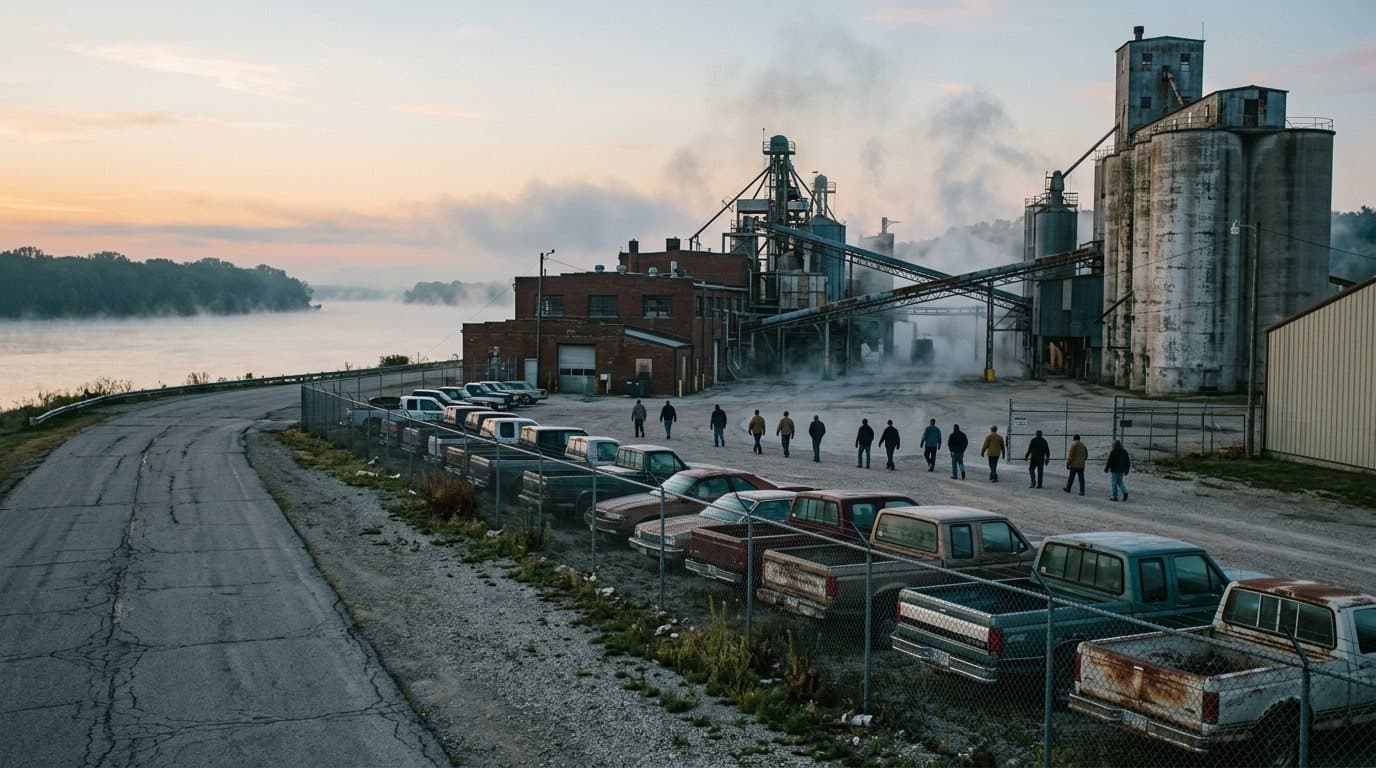
In a Midwest river town of 10,000, the renter base is the hospital shift, the school district, the county courthouse, the river industry, and the locals between houses — a tenant pool that's steady, long-stay, and chronically undersupplied with decent units. National models can't see it because they're trained on metros; you can verify it with three phone calls.
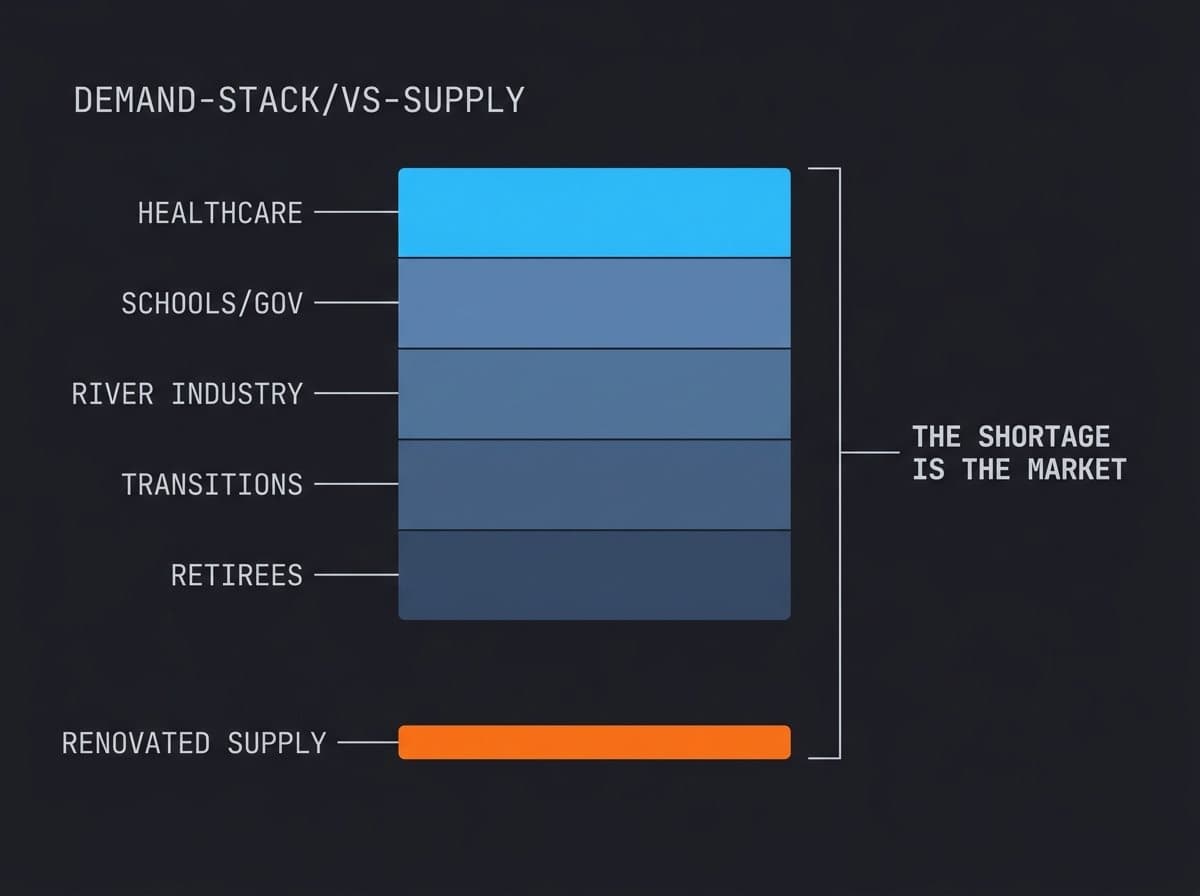
The demand stack, named
Take a Lee County-sized anchor town — Keokuk is the worked example — and list who actually signs leases:
Healthcare. The regional hospital and its satellite clinics staff nurses, techs, and travelers who need housing within minutes, now. Traveler stipends in particular pay for the best available unit.
Schools and government. Teachers, district staff, county and city employees — institutional paychecks, multi-year stays.
River and plant industry. Barge terminals, grain handling, manufacturing — shift workers who rent near work for years.
Local transitions. Divorce, downsizing, estate sales, the family saving for a first house: the permanent churn of any real town.
Retirees. Farmhouse-to-town movers who want one floor and no acreage — the quietest, longest-staying tenants in the stack.
The small-town demand profile — verify per town
Why the supply side can't respond
This is the half national coverage misses. Demand is steady — but supply shrinks. Old stock decays out of habitability faster than anyone renovates it, and new construction is economically impossible: building a $220,000 house to rent in a market where renovated houses sell for $85,000 is charity, not business. The only viable supply response is renovation of existing stock — which is capital-intensive, local-knowledge- intensive, and therefore rare.
The result is the pattern operators see everywhere in the river-town Midwest: shrinking-headcount towns with tight quality-rental markets. Population decline and rental demand are different curves — the second one is the one that pays you.
Verifying the base before you buy
1. Call every property manager in town
There are usually two to five. Ask: days-to-lease on a renovated three-bed, current vacancies, waiting lists. Their answers are the market report no national platform can generate.
2. Count the live listings
Search what's actually available to rent this week. In a tight town the decent-condition list is near zero — that absence is the data.
3. Map the anchors
Hospital, district office, courthouse, the plant — within a ten-minute drive of your block. Anchor proximity is most of what makes a stable street stable.
4. Ask who's hiring
A town whose hospital and school are posting jobs is importing tenants. Public job boards answer this in five minutes.
How Pando handles this
Tenant-base verification is a standing line in our evaluation: anchor employers, manager vacancy reads, and live-listing scarcity are documented per market before we acquire anything. It's also why our renovation standard targets the quality end — the supply that's actually scarce — rather than competing with the worn-out stock at the bottom. When a deal page says the tenant base is the hospital and the district, that's a checkable claim with phone numbers behind it, not atmosphere.
FAQ
Is small-town rental demand real? Real, steady, and concentrated on the quality end — where supply is thinnest.
Who are the tenants? Hospital staff and travelers, teachers, government and river-industry workers, local transitions, and downsizing retirees. Long stays are the norm.
Doesn't shrinking population kill it? Headcount and renter demand are different curves; habitable stock often shrinks faster than the town does.
How do I verify before buying? Manager calls, live-listing counts, anchor-employer mapping. Three phone calls beat any national model.
Next step
See how tenant-base evidence appears in Pando deals — or request access and check a live deal's demand claims against the town's managers yourself.
See the discipline in practice.
Vetted investors get first look at every deal Pando announces — evaluation numbers, not marketing numbers.
The console has read this article. Ask for the short version, the main points, or anything it raised.


