
Houses Under $100K: How to Tell a Deal From a Trap
Sub-$100K rentals are either the best math in real estate or a money pit with a low sticker. The five tests that separate them, from an Iowa operator.
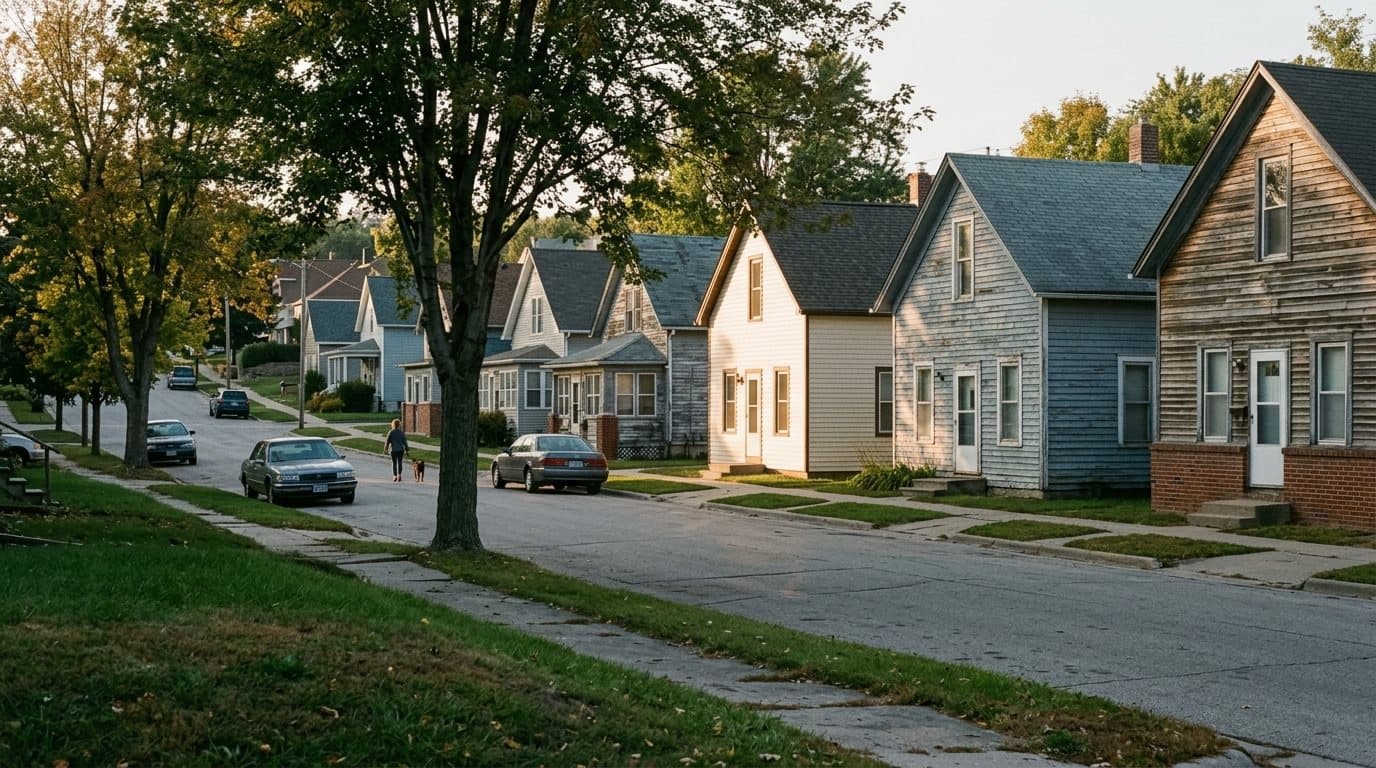
A rental under $100,000 is either the best arithmetic in residential real estate or a maintenance liability wearing a friendly sticker — and the price alone cannot tell you which. The deciding variables are the big-ticket systems, the block, and the tenant base. All three are checkable before you buy.
Why sub-$100K properties exist at all
National coverage treats cheap houses as a curiosity, but the supply is structural. In small Midwest markets, prices track local incomes — and local incomes support $70,000–$95,000 for a solid three-bedroom. That's not distress pricing. It's what houses cost where land is cheap and nobody speculated.
The rent side didn't fall with the price. Demand for decent housing in these towns is steady — hospital staff, river industry, schools — and a renovated property at $80,000 renting near $900 screens past the 1% rule without creativity. Third-party market studies keep finding the same thing; Davenport, Iowa has been cited among the strongest return-on-investment markets in the country for exactly this reason.
Why the trap version exists too
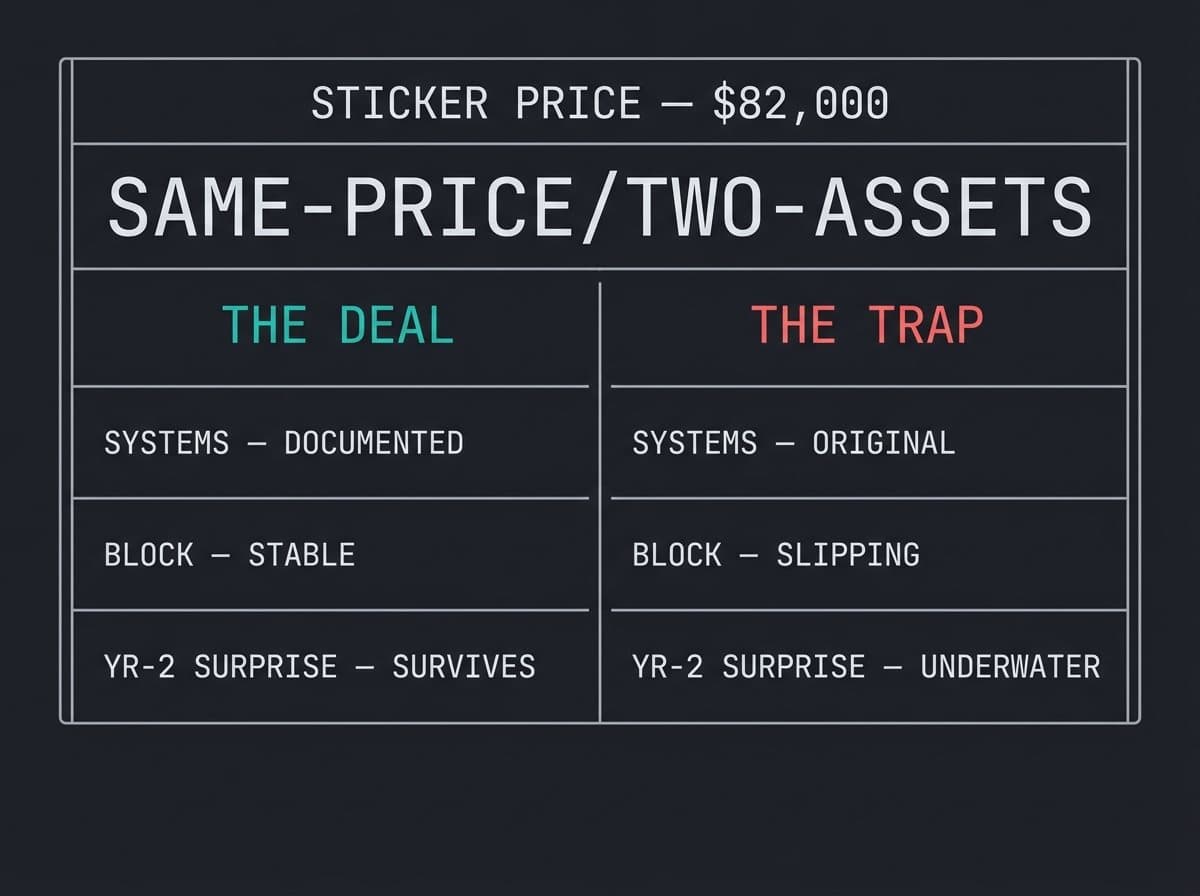
The same sticker buys a very different asset two blocks away: original 1940s wiring, a roof on year 24, a sewer lateral of unknown clay, on a street where no renovation changes the tenant pool. The trap isn't the town — it's the systems and the block.
Here's the brutal asymmetry: major repairs don't scale with price.
On the cheap house that's 15% of your basis and three years of cash flow — which is why big-ticket condition, not sticker price, is the whole game.
The five tests
1. Date the big five systems
Roof, furnace/AC, electrical, plumbing supply, sewer lateral. You want ages and evidence, not "seems fine." A sub-$100K deal is bought or lost on this list — it's most of what a 100-year-old-house inspection exists to surface, and the heart of the cost question.
2. Grade the block, not the listing
Walk or street-view every property on the street. Owner flags: kept yards, newer roofs, cars that run. A strong house on a failing block is the block's problem now — grading neighborhoods honestly is its own discipline.
3. Verify the rent with a local number
Get actual rents on that street from a property manager who places tenants there — not a national estimate trained on metro data. Small markets break national models in both directions.
4. Demand the renovation receipts
"Recently updated" means paint. A real renovation has a scope, dates, and invoices. If the seller renovated to a rent-ready standard, they can show you what was done — and if they can't, price the house as if nothing was.
5. Model one big surprise
Run the deal with a $10,000 system failure in year two. The strong version survives it annoyed; the trap version goes underwater. If the math only works in the no-surprise universe, it doesn't work.
How Pando handles this
Sub-$100K river-town stock is exactly the inventory our model was built for — and the trap version is what the eleven-criteria buy-box exists to reject. Properties reach investors after the big-ticket systems are addressed in a documented renovation, priced so the transfer still clears honest rent-to-price math. You see the scope, the receipts behind it, and the comp basis — the whole evaluation is built to be audited, because at this price point, verification is the product.
FAQ
Are houses under $100K good investments? The renovated ones on stable blocks in real rental markets — yes, often the best math available. The deferred-maintenance ones are traps. The five tests separate them.
Why are Midwest houses this cheap? Prices follow local incomes, and these markets never had a speculative run-up. The rent side stayed strong, which is the whole opportunity.
Biggest risk? Big-ticket systems. Repairs cost the same everywhere, so one $12,000 surprise is catastrophic at a cheap basis. Buy documented renovation or price it in.
Is financing harder under $100K? Often — minimum loan amounts and fixed fees bite. Much of this market trades in cash, which thins your competition.
Next step
See what a renovated river-town rental actually costs — or request access and check a live deal's scope and receipts yourself.
See the discipline in practice.
Vetted investors get first look at every deal Pando announces — evaluation numbers, not marketing numbers.
The console has read this article. Ask for the short version, the main points, or anything it raised.


