
Why Iowa River Towns Out-Yield the Markets Everyone Else Is Buying
Iowa river towns produce 12–15% gross yields while coastal markets pay 5–7%. The math, the reasons, and what the skeptics get right and wrong.
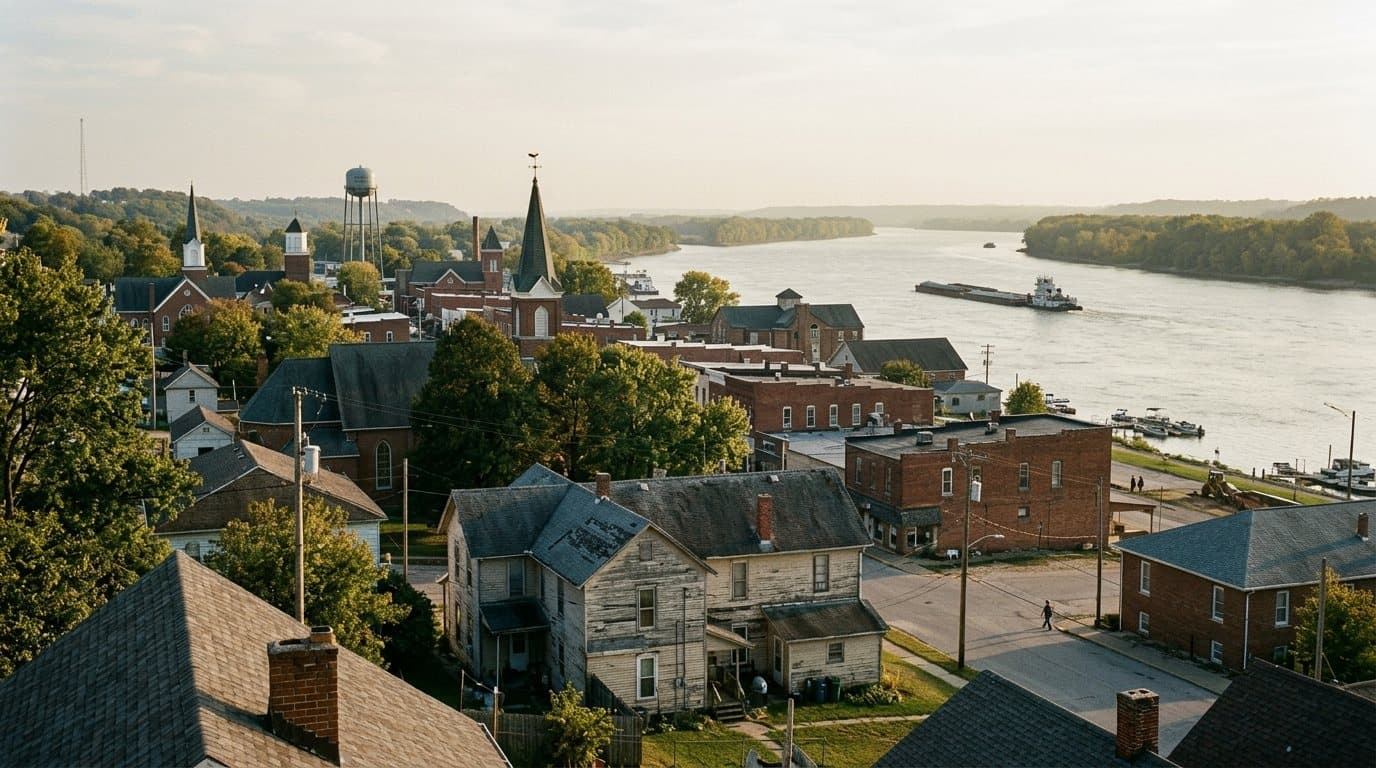
Iowa's Mississippi River towns produce gross rental yields in the 12–15% range — roughly double what investors accept in the metros everyone else is buying — because prices sit below replacement cost while rents stay anchored by stable local employment. That spread is not a secret or a glitch. It's a structural feature most capital is too impatient to use.
The markets everyone else is buying
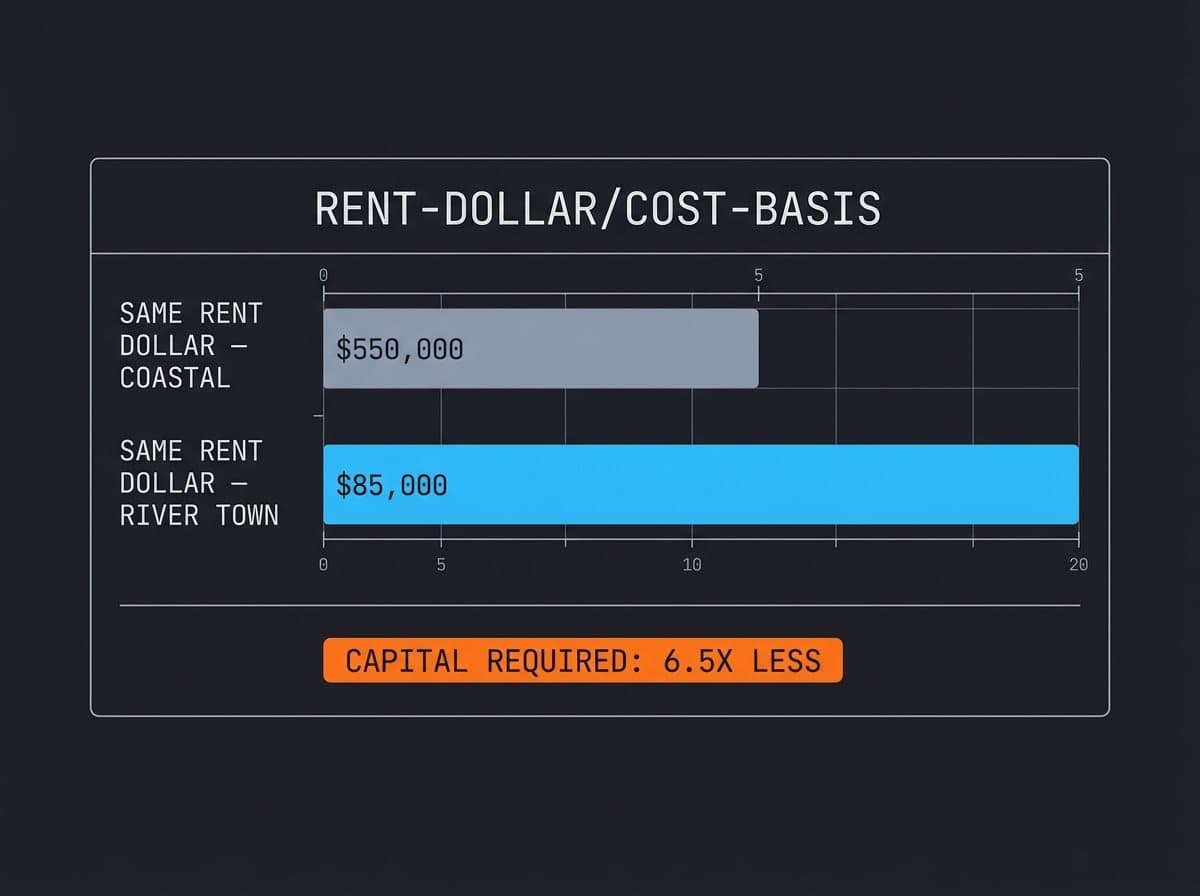
Run the numbers on the markets that dominate investor forums: a decent single-family rental in a sunbelt metro costs $320,000 and rents for $1,900 — a 7.1% gross yield before taxes that have been climbing for a decade. Coastal markets are worse: $550,000 against $2,800 is barely 6%, and the thesis quietly becomes "appreciation will save me."
That's not investing in a rental. That's buying an option on price growth with a tenant attached.
The river-town counter-case
Now run the same arithmetic in southeast Iowa. A renovated single-family home in Keokuk, Fort Madison, or Burlington trades in the $70,000–$110,000 range and rents for $750–$1,100 a month — the full cost stack is its own article. Take the middle: $85,000 against $895/month is a 12.6% gross yield. The same dollar of rent costs half as much to buy.
Three structural reasons the spread exists:
1. Prices below replacement cost
You cannot build these houses for what they sell for. An 1890s two-story with a sound envelope sells for less than the cost of its own foundation and framing today. When the market price of a durable asset sits below the cost to recreate it, downside has a floor that spreadsheet projections never provide.
2. Rents anchored by people, not narratives
County employment, river industry and logistics around Lock and Dam 19, regional healthcare, schools — the demand for decent rental housing in these towns is unglamorous and steady. Rents didn't spike in 2021 and they didn't crater after; they grind along, which is exactly what an income asset should do.
3. No institutional competition
The buyers who compress yields everywhere else — funds, iBuyers, out-of-state syndicates — don't operate at $85,000 price points in towns of ten thousand people. The competition is local, sparse, and slow. That's why the inefficiency persists instead of being arbitraged away in a quarter.
What the skeptics get right
The standard objection is population decline, and the data behind it is real — these towns are smaller than they were in 1980. Two things the objection misses, covered in depth in the small-town fundamentals article: a town doesn't need growth for its occupied rental stock to stay tight, and the housing that's leaving the market is largely the unrentable tail, not the renovated core.
The honest trade-offs you should price in: appreciation will be slow, and exits take longer than in a metro. River-town real estate is a hold-for-income asset class. If your model needs a 24-month flip, use a different market — or read the ten out-of-state mistakes before you use any market at all.
How Pando handles this
Pando operates in exactly these markets — based in Keokuk, buying along the Mississippi corridor — because the buy-box math only clears where prices sit under replacement cost and rents hold. Every property is renovated by local crews and transferred to a vetted investor below its post-renovation comparable value, so the structural discount lands on the investor's side of the closing statement as equity at close. Closed deals have averaged high-teens equity at close on top of the yield case above.
FAQ
Is Iowa a good place to buy rental property? For cash flow, among the best in the country: 12–15% gross yields in the river-town tier. For appreciation speculation, no — and that clarity is a feature.
What are the best Midwest markets for rental property? The stable small markets institutions skip — Mississippi River towns in southeast Iowa and their neighbors — out-yield the metros by a wide margin.
Why are houses so cheap in Iowa river towns? Decades of slow demand thinning against durable housing stock pushed prices below replacement cost while rents held. Cheap price, durable rent — that's the yield.
What is the catch? Slow appreciation and slower exits. These are hold-for-income assets; day-one equity is the margin of safety, not a flip premium.
Next step
See how this thesis becomes specific deals — request access and check the yield math on live Pando properties.
See the discipline in practice.
Vetted investors get first look at every deal Pando announces — evaluation numbers, not marketing numbers.
The console has read this article. Ask for the short version, the main points, or anything it raised.


