
What a Rental Property in Iowa Actually Costs in 2026
Real 2026 numbers for Iowa rental property: purchase ranges by market tier, closing costs, taxes, insurance, and the all-in cost to your first rent check.
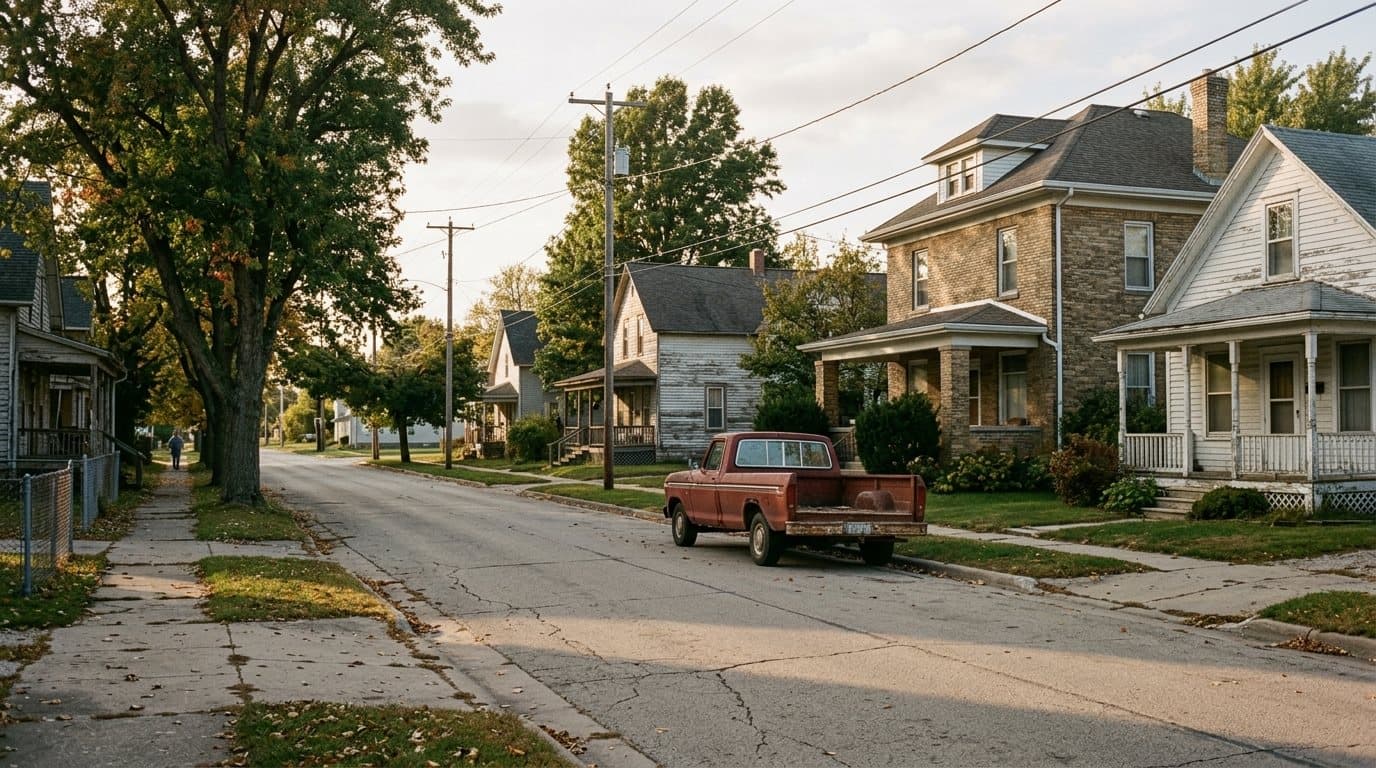
A rentable single-family home in Iowa costs anywhere from $70,000 in a southeast river town to $280,000 in a Des Moines suburb — and the all-in number that actually matters, once closing costs, taxes, insurance, and reserves are counted, typically runs 8–12% above the purchase price. Here is the full stack, line by line.
The number nobody quotes: all-in cost to first rent check
Listing prices get all the attention, but a rental property's real cost is everything you spend before the first rent check clears: purchase price, closing costs, any renovation needed to make it rent-ready, carrying costs during that work, and the reserves a responsible owner sets aside on day one.
Skip any of those lines in your math and Iowa will still look cheap — but you'll be comparing brochure numbers, not investment numbers. The brochure number is how out-of-state investors end up surprised. The all-in number is how they end up paid.
Why Iowa's cost structure is different
Iowa isn't one market. The spread between its tiers is the whole story:
| Market tier | Typical rentable SFH | Typical rent | Gross yield |
|---|---|---|---|
| Des Moines metro | $180,000–$280,000 | $1,400–$1,900/mo | 8–9% |
| College towns (Iowa City, Ames) | $200,000–$320,000 | $1,500–$2,100/mo | 7–9% |
| River towns (Keokuk, Fort Madison, Burlington) | $70,000–$110,000 | $750–$1,100/mo | 12–15% |
The river-town tier is where the math gets interesting: acquisition prices sit below replacement cost while rents stay anchored by steady local demand — hospital systems, river industry, county employment. That gap is the foundation the Pando model is built on — the full yield case for these markets is its own article — and it's why a disciplined investor can be yield-rich in a town the coastal market has never heard of. For a street-level look at the anchor market itself, see the Keokuk field guide.
The full cost stack, line by line
1. Purchase price
The table above covers the tiers. One discipline matters more than the tier you pick: price against post-renovation comparable sales, not against the listing. A $65,000 house that needs $30,000 of work in a town where renovated comps sell for $85,000 is not a $65,000 deal.
2. Closing costs — 2–4%
Title work, transfer tax, recording, lender fees if financing. Iowa's transfer tax is modest (about $1.60 per $1,000 of value), so closing costs here skew lower than coastal equivalents. On an $85,000 cash purchase, budget roughly $2,000–$3,000.
3. Renovation — the variable that decides everything
A distressed river-town property typically needs $20,000–$40,000 to reach rent-ready: mechanicals and structure first, then envelope, then finishes. This is the line where out-of-state investors get hurt — managing a rehab from three states away, with no local crew relationships, is how a $25,000 budget becomes $45,000. It's also the line a wholesale operator's model removes entirely: the renovation is done, by local crews, before the property is offered.
4. Property taxes — ~1.4–1.6% effective
Iowa rentals don't get the homestead credit, so budget the full effective rate: roughly $1,200–$1,400/year on an $85,000 property.
5. Insurance — $900–$1,500/year
Landlord policies on river-town single-family homes generally land in this band, with flood-zone status the biggest swing factor. (Flood zone is one of the eleven buy-box criteria — Pando passes on flood-zone-A properties outright, which keeps this line boring.)
6. Property management — 8–10% of rent
Unless you live within driving distance, professional management is not optional. On a $900/mo river-town rental that's roughly $850–$1,100/year, plus typical leasing fees.
7. Reserves — fund them on day one
A responsible baseline is 5–10% of rent for maintenance plus a vacancy allowance. The discipline isn't the percentage — it's funding the account at closing instead of "starting next year."
A worked example
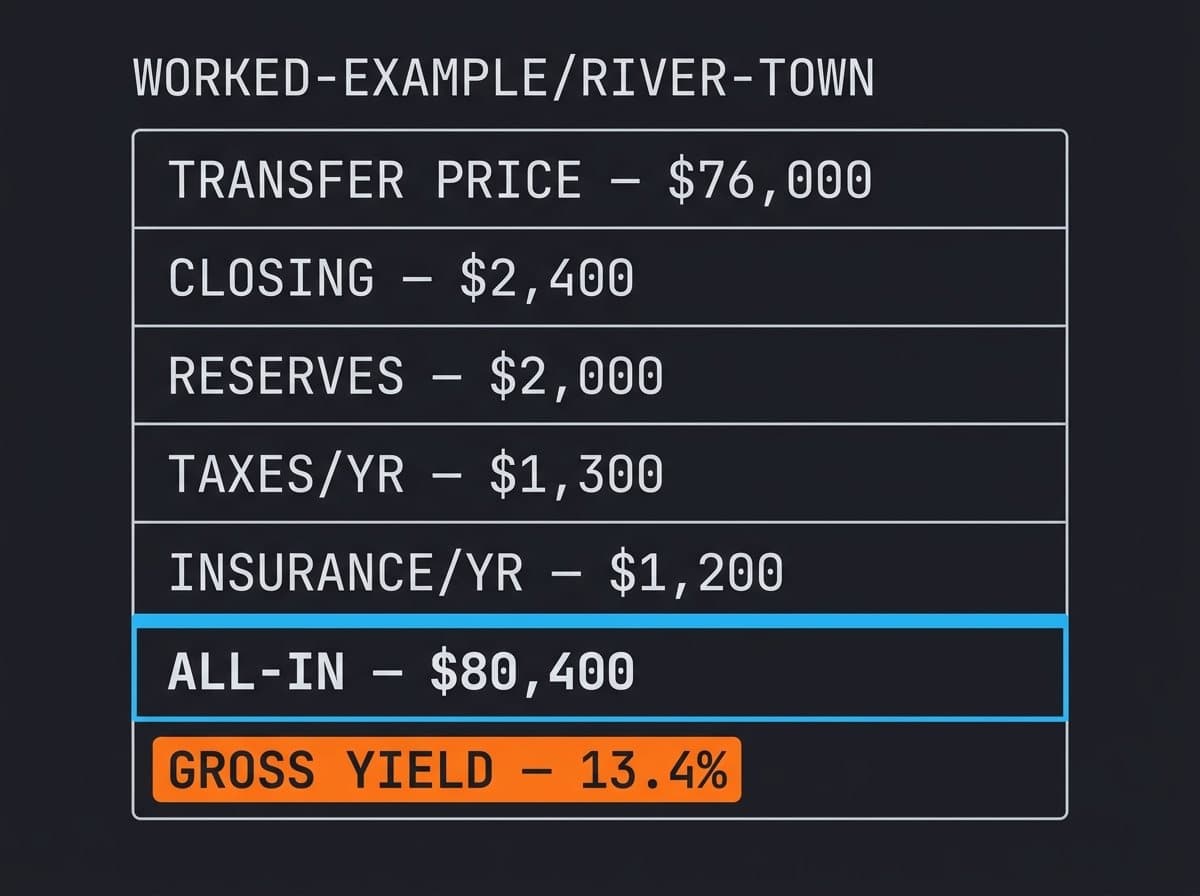
The all-in math on a representative renovated river-town rental, bought finished from a disciplined operator:
| Line | Amount |
|---|---|
| Transfer price (renovated, rent-ready) | $76,000 |
| Closing costs | $2,400 |
| Day-one reserves | $2,000 |
| All-in cost | $80,400 |
| Monthly rent | $895 |
| Gross yield on all-in | 13.4% |
No renovation line, no carrying costs during a rehab, no contractor risk — that work happened before the transfer, and the price still sits below the property's comparable value.
How Pando handles this
Every Pando deal page publishes the same stack this article walks through — transfer price, the rent the market analysis supports, tax and insurance figures for that specific property, and the comparable-sales basis for its value. The eleven-criteria buy-box screens out the properties where this math doesn't hold, which is most of them. Investors see finished numbers, not projections, and can verify any line independently before closing.
FAQ
How much does a rental property cost in Iowa? $180,000–$280,000 in the Des Moines metro, $200,000+ in the college towns, and $70,000–$110,000 renovated in the southeast river towns — the tier where yield math works hardest.
What is the cheapest way to buy a rental property in Iowa? Below-replacement-cost acquisition plus renovation — done either by you (with local crews you'd have to build) or by a disciplined operator who transfers the finished property below comp value.
What are property taxes on a rental in Iowa? Roughly 1.4–1.6% effective, no homestead credit on rentals — about $1,200–$1,400/year on an $85,000 property.
Is Iowa a good state for rental property investment? For cash flow and day-one equity, among the best; gross yields in the river towns run 12–15%. For appreciation speculation, look elsewhere — and that's the point.
Next step
Request access to see the full cost stack on live Pando deals — every line of this article, with real numbers attached.
See the discipline in practice.
Vetted investors get first look at every deal Pando announces — evaluation numbers, not marketing numbers.
The console has read this article. Ask for the short version, the main points, or anything it raised.


