
The $60K Duplex: Small Multifamily in River Towns
Two rents on one roof at a small-town price. Why river-town duplexes screen better than single-families — and the three ways they fool buyers.
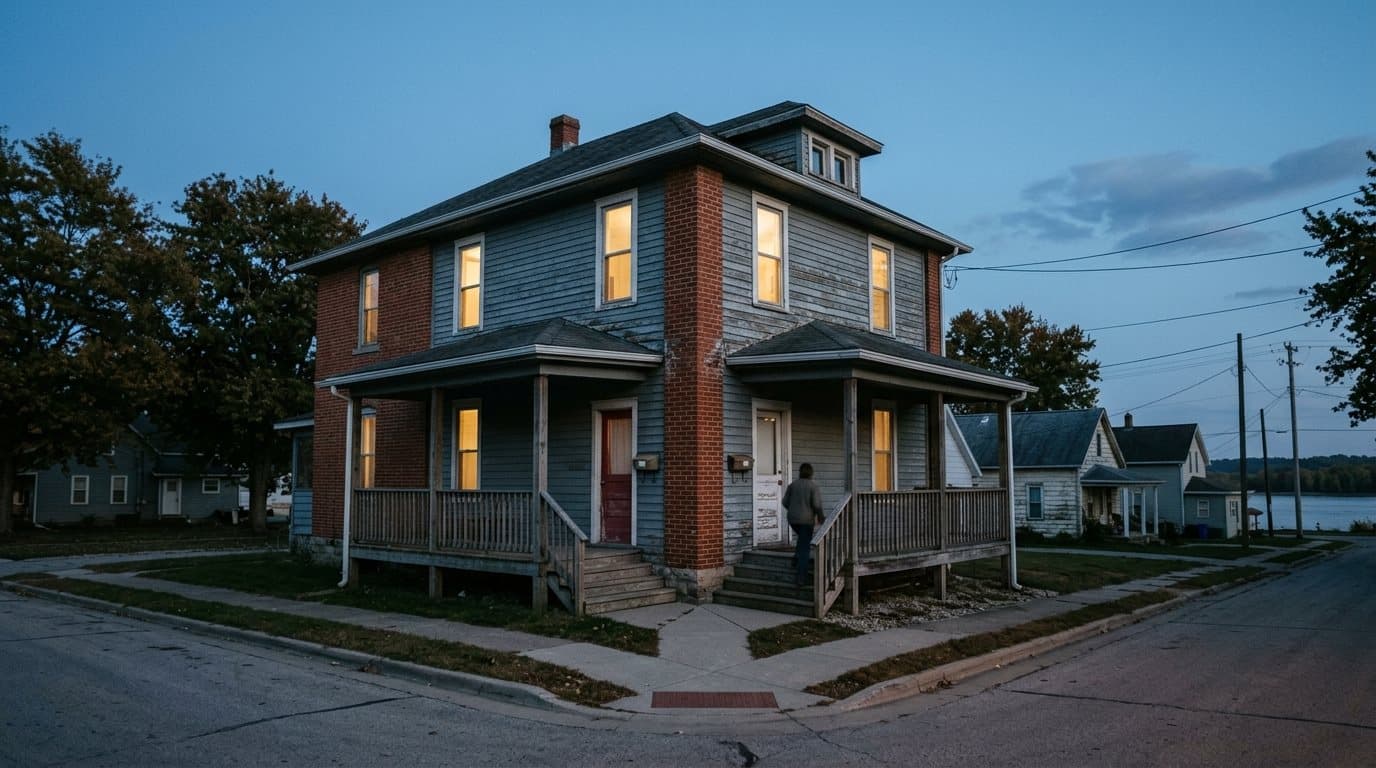
A river-town duplex stacks two rents on one roof, one lot, and one tax bill — often at a total price below a single renovated house in a larger market. The screen math routinely beats single-family. The catch list is specific: metering, conversion quality, fire separation, and an exit that runs on investor math alone.
Why the screen loves duplexes
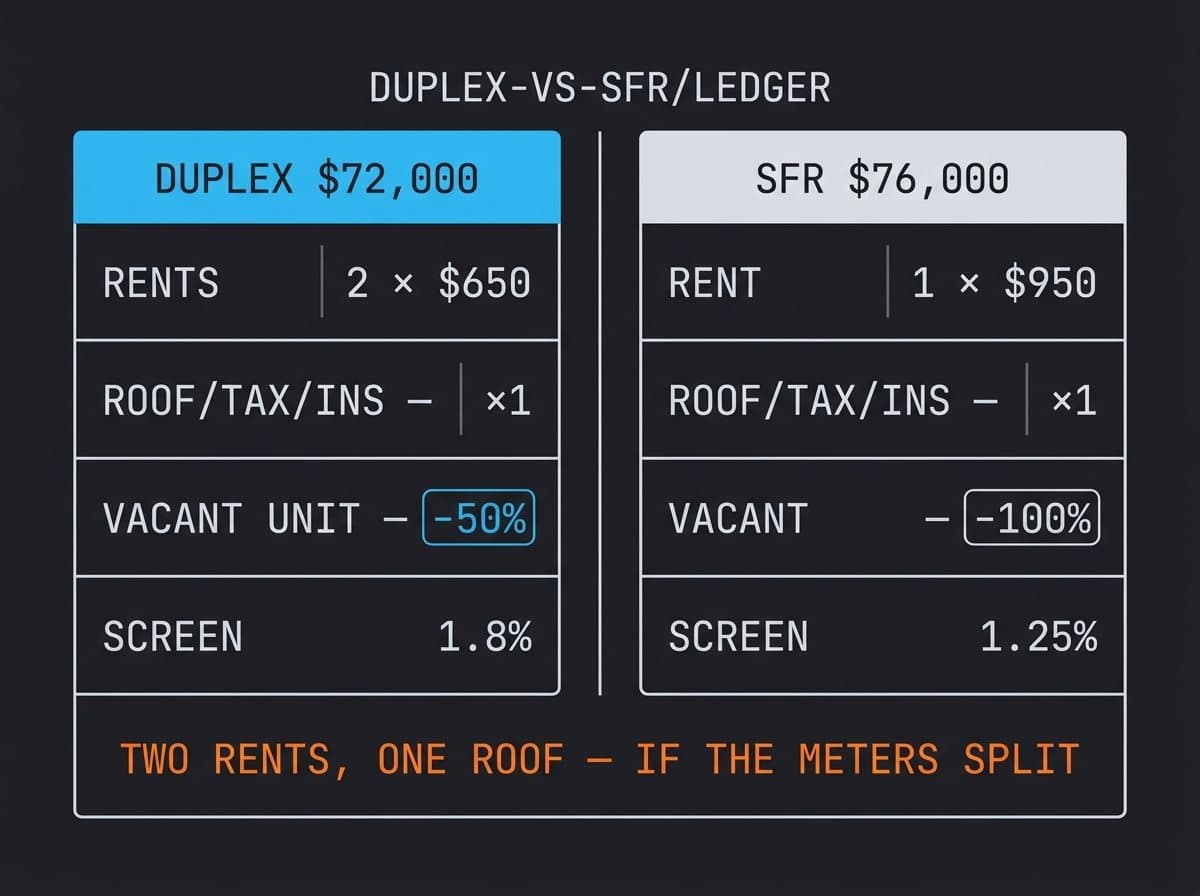
Operating costs don't double with the second unit. The roof, the lot, the tax parcel, the insurance policy — one of each serves two rents. And vacancy stops being binary: one empty unit is a 50% month, not a 0% month, which smooths exactly the line that hurts most on a single sub-$100K rental.
Representative river-town duplex — screen math, not a verdict
A screen near 2% would be an outlier flag on a single-family — on small-town duplexes it's common, and the reason is structural, not suspicious: the buyer pool is investors only, so the price carries no owner-occupant premium.
The three ways duplexes fool buyers
1. The metering trap
One water heater, one furnace, one electric meter serving two units means you pay the utilities — and tenants with free heat run windows open in January. Separate metering (or at least separate furnaces and water heaters) is the difference between the pro forma and reality. Retrofitting separation costs real money; price it in or pass.
2. The conversion question
Many small-town duplexes are century homes cut in two somewhere along the way. The question is whether the conversion was legal and competent: real fire separation between units, two legal egress paths, sensible layouts — or a 1970s weekend project with paneling. County records and the physical inspection answer this; "it's always been a duplex" does not.
3. The exit math
The thinner buyer pool that makes duplexes cheap to buy makes them slower to sell. A duplex is a hold-for-rent asset more purely than a house is — if your plan needs a clean exit to an owner-occupant, buy the house instead. Going in with hold math is what makes the discount yours instead of the next buyer's.
Underneath: it's still a century house
Every system on the old-stock checklist applies — wiring, lateral, foundation, roof — with the duplex multiplier on the inside systems: two kitchens, two baths, two furnaces to date and price. The tenant base is the same hospital-school-plant stack, skewed toward singles and couples who want exactly the smaller units a duplex offers.
How Pando handles this
Duplexes come through our pipeline regularly — river towns are full of them — and the buy-box treats them as their own animal: metering and conversion quality are explicit evaluation lines, and a building that fails fire-separation or egress doesn't advance at any price. When a duplex transfers, the deal page carries both units' rent basis, the metering configuration, and the same documented renovation ledger as every other Pando deal. Two rents on one honest roof is some of the best math in our markets — which is exactly why the dishonest version needed naming.
FAQ
Duplex or single-family? Duplex wins the screen math; single-family wins the exit. Decide by your hold plan, not the ratio.
Why so cheap in the Midwest? Income-tied pricing plus an investor-only buyer pool — no owner-occupant premium in, none out.
The make-or-break inspection items? Utility metering, conversion legality, fire separation, egress — then the full century-house list.
Same tenants as a house? Same anchor-employer base, skewed to singles and couples who want smaller units.
Next step
See how Pando evaluates small multifamily — or request access and read a live duplex's metering and rent basis yourself.
See the discipline in practice.
Vetted investors get first look at every deal Pando announces — evaluation numbers, not marketing numbers.
The console has read this article. Ask for the short version, the main points, or anything it raised.


