
Out-of-State Rental Investing: The 10 Mistakes That Cost Real Money
The ten mistakes that separate out-of-state investors who build portfolios from the ones who quit after one property — and the fix for each.

Out-of-state rental investing fails for predictable reasons: investors substitute photos for verification, pro formas for math, and hope for management. Every one of the ten mistakes below has a specific, boring fix — and the investors who apply them are the ones who still own rental property five years in.
Why distance changes the game
Investing where you live, you absorb information for free — you know which streets flooded, which employer is hiring, what a fair rent is. Investing at distance, every one of those signals has to be replaced by a system, a document, or a person you've verified. The mistakes below are all versions of skipping that replacement.
The ten mistakes
1. Buying off photos and a pro forma
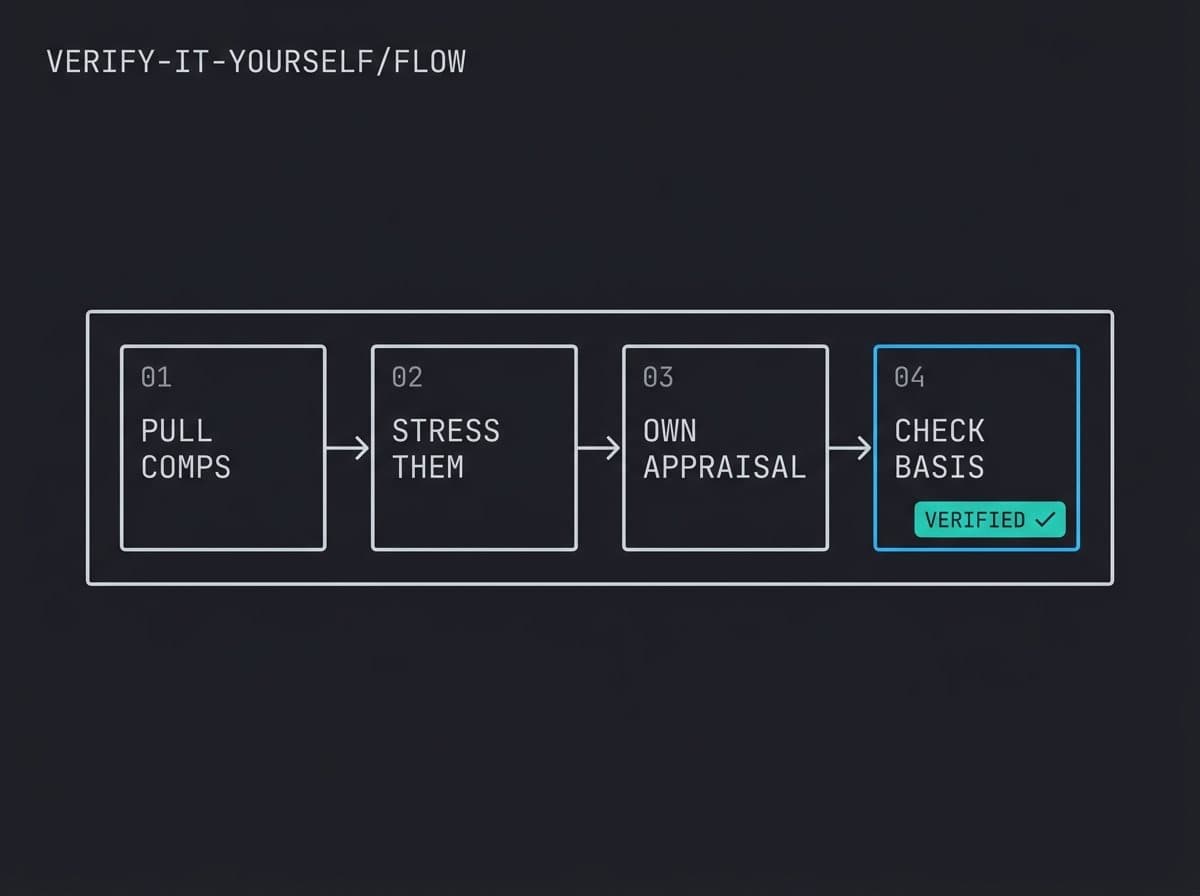
The listing photos are marketing. The pro forma is arithmetic somebody chose. The fix is the discipline of verifying equity and value independently — your own appraisal, your own comp pull, before wiring anything.
2. Chasing the cheapest house in the market
A $35,000 house is usually $35,000 for reasons that don't fit in a listing: block, condition, or a rental market that doesn't exist. The target isn't cheap — it's price below replacement cost with durable rent demand, which is a different filter entirely.
3. Picking a market from a top-10 listicle
By the time a market headlines a listicle, the spread that made it interesting is being bid away. Better: pick markets by structure — yield against replacement cost, employment anchors, competition profile — the way the river-town case is built.
4. Underestimating renovation from a distance
Long-distance rehab is where budgets go to double. No local crew relationships, no eyes on the site, change orders by text message. If you can't verify renovation quality in person, buy renovated — and verify the work product instead (inspection, photos tied to the scope, warranty terms).
5. Skipping the independent inspection
Distance makes the $450 inspection more valuable, not less. It's the only set of eyes on the property that you paid for and nobody else did.
6. Self-managing from three states away
Collecting rent, fielding a furnace failure, and turning a unit from your kitchen table in another time zone — it works until the first nonpayment. Budget professional management (8–10% of rent) into the deal before you buy, and vet the manager like a partner, because they are one.
7. Ignoring taxes and insurance until closing
Property tax regimes and insurance costs vary wildly by state, and rentals often lose owner-occupant credits. The Iowa cost-stack article walks every line; whatever your market, build the stack before you offer, not after.
8. Trusting the seller's rent number
The advertised rent is a claim. Verify it three ways: actual lease in place (read it), local market comps (pull them), and a property manager's written opinion of market rent. Where the three disagree, believe the lowest.
9. Buying without reserves
The deal that only works with zero vacancies and zero repairs is a coin flip, not an investment. Fund maintenance and vacancy reserves at closing. Surprises at distance cost more and land slower — the reserve is what keeps them from becoming forced sales.
10. Having no exit thesis
Small high-yield markets trade slowly. That's fine — if you bought for income with day-one equity as your margin of safety. It's a problem if your plan quietly depended on flipping out in two years. Know which asset you bought before you buy it.
How Pando handles this
Pando's model exists because of this list. The renovation risk (#4) is removed — local crews finish the property before it's offered. The verification problem (#1, #8) is inverted — every deal page publishes the numbers our own evaluation used, built to be independently checked. The market selection (#3) is structural, not trendy. And the buy-box discipline screens out the cheap-for-a-reason inventory (#2) before an investor ever sees it. What stays on your side of the table: management selection, reserves, and the exit thesis — the parts that should never be outsourced.
FAQ
Is buying rental property out of state a good idea? It's how investors in expensive metros reach workable yields — if you replace presence with verifiable systems instead of trust.
What is the biggest mistake out-of-state investors make? Buying off photos and a pro forma without independent verification. Most other failures are downstream of that one.
How do I manage a rental from another state? Professional local management, budgeted from day one, vetted like a partner.
How much should I budget for surprises? Reserves funded at closing — 5–10% of rent for maintenance plus a vacancy allowance is a reasonable baseline.
Next step
See what a deal looks like when the operator has already answered this list — request access to live Pando deals.
See the discipline in practice.
Vetted investors get first look at every deal Pando announces — evaluation numbers, not marketing numbers.
The console has read this article. Ask for the short version, the main points, or anything it raised.


