
Population Decline ≠ Dead Market: How to Read Small-Town Fundamentals
Population decline is the standard objection to small-town rentals — and it's the wrong metric. The four numbers that actually predict rental performance.
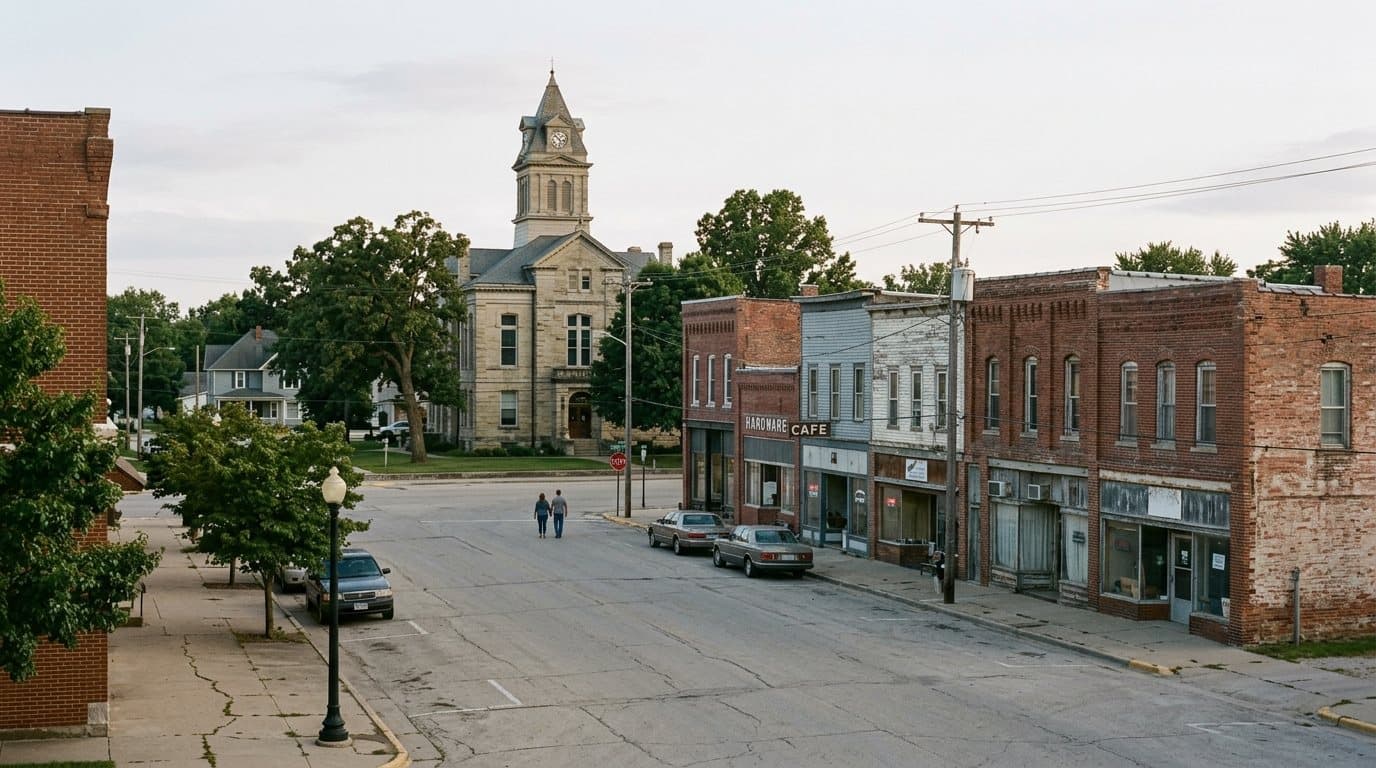
Slow population decline tells you almost nothing about whether a small town's rentals will perform — the numbers that do are occupied-stock tightness, employment concentration, rent durability, and price against replacement cost. Towns failing the headline metric while passing all four are where the best yield math in the country hides.
The objection, stated honestly
Every investor who looks at a Mississippi river town runs the census query and sees the same thing: fewer people than 1980. The instinct is sound — demand matters — and anyone selling you "this town is about to boom" deserves your skepticism.
But the census line is a proxy, and at slow rates of change it's a bad one. A landlord doesn't rent to a population trend. A landlord rents one specific house to one specific household, at a rent set by the local balance of decent housing against the people who need it. That balance is measurable, and it routinely diverges from the headline.
Why the proxy fails at slow decline
Two mechanisms, both visible in towns like Keokuk and its river neighbors:
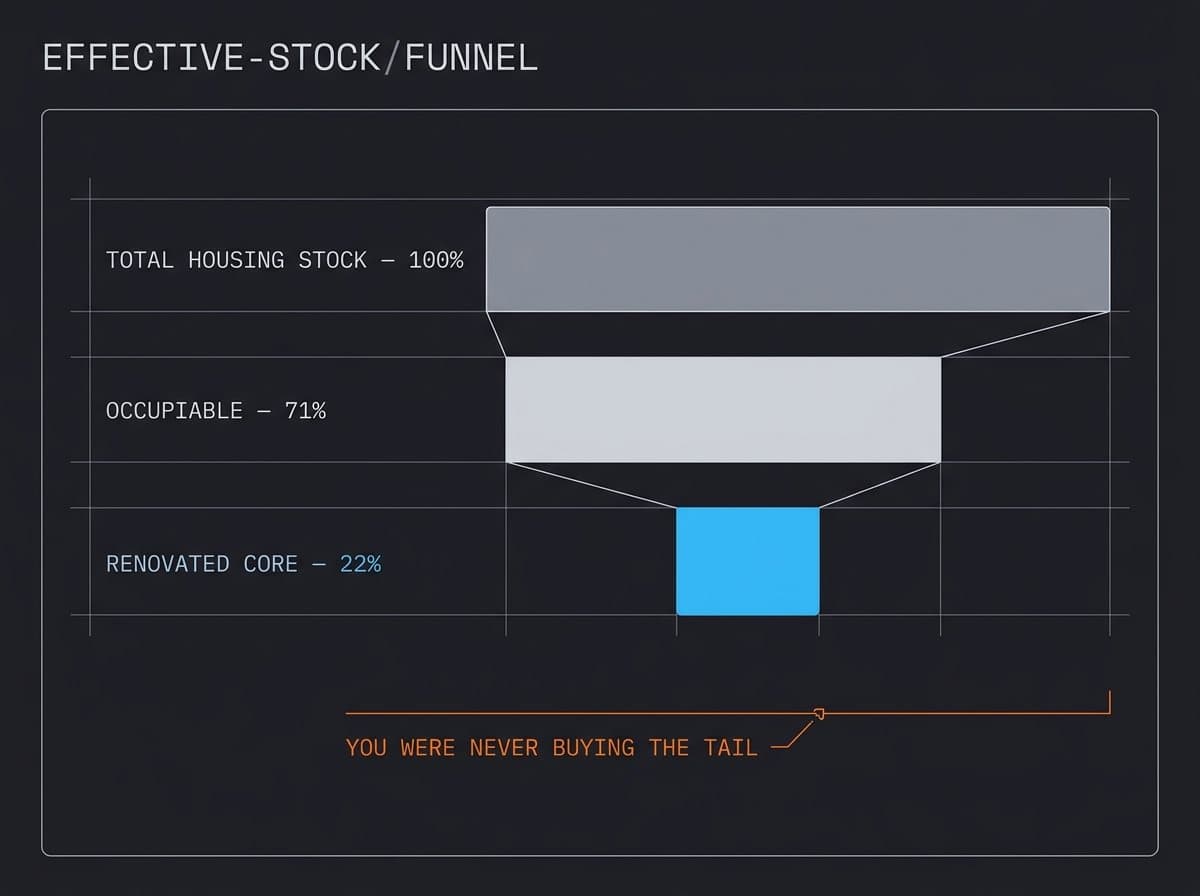
The stock declines with the population. Houses leave the rental market too — condemned, demolished, abandoned by absentee heirs, or simply too far gone to renovate economically. What exits is overwhelmingly the unrentable tail. A town can lose 8% of its people and 15% of its effective housing supply over the same stretch, and the renovated core gets tighter, not looser.
Demand concentrates on quality. As total demand thins, the households that remain compete for the small pool of well-maintained rentals. The worst block in town gets cheaper forever; the renovated two-story near the school does not. Averages hide this completely.
The four numbers that actually predict performance
1. Employment concentration
The genuinely fatal small-town event isn't drift — it's the one-plant town losing the plant. Check the employer mix: if no single employer carries more than roughly a fifth of the base, the market can absorb a closure. Diversified-but-boring (county government, schools, healthcare, river logistics, agribusiness) is the profile you want.
2. Rent durability, not rent level
Pull five years of actual rents. In a structurally sound small town, rents grind flat-to-slowly-up through the same years the census line drifts down. If rents are falling, believe them over every other signal — that's the market telling you demand is genuinely breaking.
3. Effective rentable stock
Of the houses in town, how many are actually rentable to a working household today? Drive it (or have someone do it street by street). The smaller and tighter that core is, the more pricing power its owners hold — decline in the tail is irrelevant to you because you were never buying the tail.
4. Price against replacement cost
The margin of safety. When the renovated core trades below the cost of rebuilding it, the yield math works and the downside has a physical floor. When a small town trades above replacement cost, someone is paying for a growth story in a market that doesn't sell one.
How Pando handles this
Pando's buy-box was built for exactly this terrain — it prices properties against renovated comparable sales and replacement cost, screens employment-anchored markets along the river corridor, and passes on the cheap-for-a-reason tail entirely. The result is a pipeline concentrated in the maintained core of towns that fail the census test and pass the four that matter. The Keokuk field guide shows the framework applied to one real market, block by block.
FAQ
Should I invest in small town real estate? For income, yes — when the four fundamentals hold. For appreciation, no.
Is population decline bad for rental property? Slow decline mostly removes the unrentable tail while demand concentrates on the maintained core. Employer concentration is the real risk.
What data should I look at first? Employment mix, five years of actual rents, effective rentable stock, and price versus replacement cost.
What kind of small town should I avoid? One-employer towns and anywhere rents are actually falling.
Next step
Request access to see deals from markets that pass all four tests — with the numbers attached.
See the discipline in practice.
Vetted investors get first look at every deal Pando announces — evaluation numbers, not marketing numbers.
The console has read this article. Ask for the short version, the main points, or anything it raised.


