
Section 8 in Small Midwest Markets: The Math Most Landlords Get Wrong
Section 8 in small Midwest markets means federally backed rent on modest housing stock. The real pros, the real frictions, and the math that decides.

Section 8 is a federal rent subsidy paid directly to the landlord: the tenant pays roughly 30% of their income, the housing authority pays the rest, on schedule, in any economy. In small Midwest markets — where achievable rents sit near the voucher payment standard — it can be the most reliable revenue a modest rental produces. The catch is process, not payment.
What Section 8 actually is
The Housing Choice Voucher program, run locally by public housing authorities, qualifies low-income tenants and pays the subsidized share of their rent straight to the property owner. The payment standard follows HUD Fair Market Rents for the county — a published, inspectable number.
That detail matters for the river-town thesis: in expensive metros, market rents tower over the voucher standard and landlords opt out. In a market where a renovated three-bedroom rents for $950, the standard is usually competitive with — sometimes above — what the open market pays. The program and the market meet exactly where disciplined Midwest investors are already buying.
Why the question is sharper here
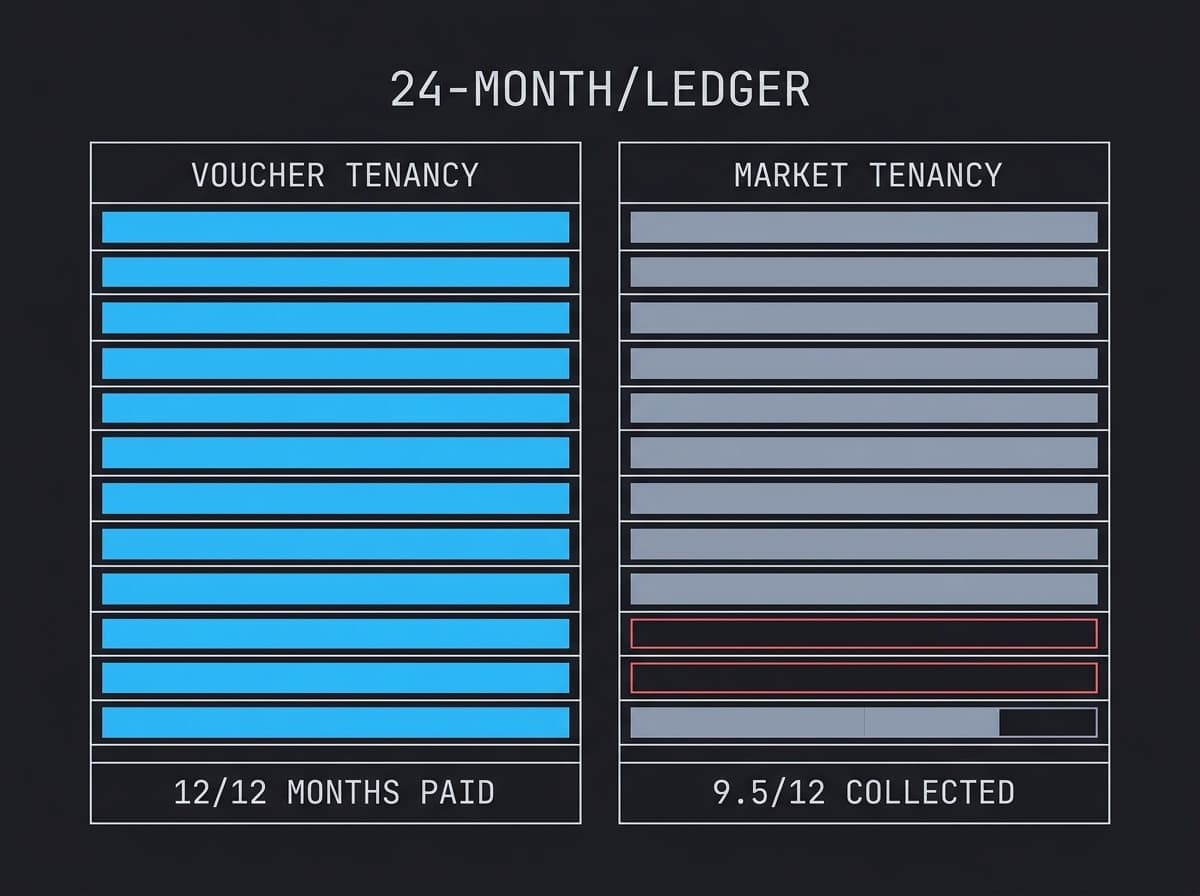
A voucher tenancy changes the shape of your revenue, not just the amount. The subsidized portion arrives like a utility payment — electronically, on the first, indifferent to layoffs at the plant. Over a 24-month tenancy in a modest market, the difference between a voucher ledger and a market-tenant ledger is mostly the rows that didn't happen: missed months, turnover gaps, re-leasing fees.
Payment standards track HUD Fair Market Rent by county, a published number you can check against any rent claim before you buy.
The trade is friction at the edges. First payment can lag 30–90 days behind lease-up while inspection and paperwork clear. Annual inspections enforce repairs on the housing authority's checklist and schedule, not yours. Rent increases are requested, compared against market data, and approved — not declared.
Running the decision like an operator
1. Compare the payment standard to real market rent
Pull the county's payment standard and the street's actual rents. When the standard is at or above achievable market rent — common in small-town markets — the program adds payment reliability without revenue sacrifice. When it's far below, the program isn't for that property.
2. Price the onboarding gap
Model 60 empty days before the first authority payment. If the deal only works with day-one rent, it's too thin — the same basis discipline that protects you everywhere protects you here.
3. Treat the inspection as a free audit
The annual inspection list is the same list a good operator maintains to anyway: function, safety, weather-tightness. A property renovated properly passes without drama. A property that fails inspection was failing its tenant first.
4. Underrate neither the demand nor the duty
Voucher waiting lists in most counties run years deep; an accepted, well-kept unit rarely sits. The flip side is that you're housing someone whose alternatives are thin — the maintenance call you answer late lands harder. Operators who treat that duty as part of the model keep the tenancies that make the math work.
How Pando handles this
Voucher compatibility is part of how we read a property's tenant base during evaluation. Renovation scopes are written to pass a housing authority inspection on the first visit — because the inspection list and our rent-ready standard are nearly the same list. When a transfer candidate sits in a strong voucher market, the deal page says so, with the county payment standard next to the in-place or projected rent so you can check the spread yourself. Reliable rent on modest housing stock is the river-town model working as designed — Iowa landlord-tenant rules govern the rest of the relationship either way.
FAQ
Is Section 8 good for landlords? In modest-rent markets, often yes: scheduled federal payment, deep demand, longer tenancies. The cost is onboarding lag, annual inspections, and approval-gated rent increases.
How much rent does the program pay? The authority pays the gap between roughly 30% of the tenant's income and the payment standard tied to HUD Fair Market Rent for the county.
What's the biggest drawback? The 30–90 day gap before the first authority payment, and inspections that set their own repair timeline.
Do voucher tenants really stay longer? On average, yes — and turnover, not vacancy, is what quietly eats small-market returns.
Next step
See how Pando evaluates tenant base and rent reliability — or request access and compare a live deal's rent against the county's published standard.
See the discipline in practice.
Vetted investors get first look at every deal Pando announces — evaluation numbers, not marketing numbers.
The console has read this article. Ask for the short version, the main points, or anything it raised.


