
How to Verify an ARV: Auditing the Comps Behind a Deal
ARV is only as honest as its comps. A working method for auditing after-repair value on any deal — what to pull, what to reject, where claims break.

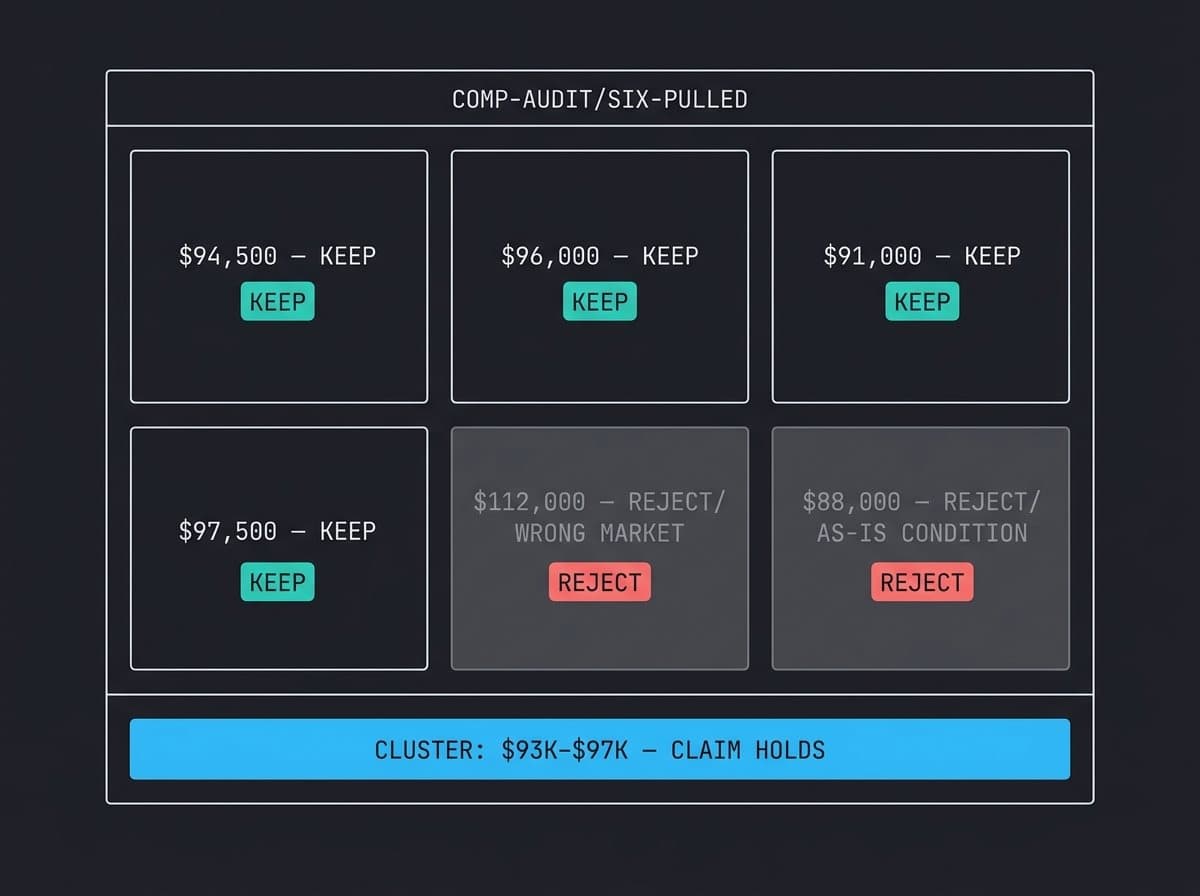
An ARV — after-repair value — is verified, not calculated: pull three to five recent sales of genuinely comparable renovated properties in the same micro-market, adjust honestly for differences, and see whether they cluster around the claimed number. If the claim needs the best sale in town to pencil, the real answer is the cluster, not the claim.
What ARV actually anchors
Every number in a value-add deal hangs off the ARV. The equity-at-close claim is ARV minus your price. The refinance plan is a bank appraisal converging on ARV. Even the rehab budget is justified by the value it completes. Inflate the ARV 10% and every downstream number inherits the lie.
That's why ARV is where optimistic deals go wrong first — and why a skeptical buyer audits it before anything else.
Why audits beat formulas
There is no formula. An ARV is an argument built from comparable sales, and arguments are checked by attacking their evidence. The good news: the evidence is public. County sale records, listing histories, and photo archives let you re-run anyone's comp work from your desk — which is most of remote diligence anyway.
Working standards for a defensible comp set
The audit, step by step
1. Re-pull the comps from scratch
Don't start from the seller's sheet — you'll anchor to it. Pull recent sales yourself, then compare lists. The comps the seller didn't include are usually the most informative thing you'll find all week.
2. Enforce the same micro-market
In small towns, value changes block by block, not zip by zip. A sale across the highway, by the rail yard, or in the historic district is a different market wearing the same town name. Map every comp. "Half a mile away" can be disqualifying.
3. Match condition, not just size
ARV comps must be sales of renovated properties — that's the "after" in after-repair. A dated-but-livable sale tells you the as-is floor, not the ARV. Listing photos settle this in minutes.
4. Interrogate the outlier
Every inflated ARV leans on one comp. Find the highest sale in the set and investigate it: estate sale? Corner double lot? Finished basement the subject lacks? If removing one comp moves the answer materially, the answer was never solid.
5. Adjust like an appraiser, then round down
Square footage, beds and baths, garage, lot, mechanical age — adjust each difference in dollars, not vibes. Where a judgment call is close, take the conservative side. A real deal survives conservative adjustments; a marginal one needs your generosity.
6. Buy the independent opinion
When the claim drives a six-figure decision, order your own appraisal. An operator confident in their number will encourage it — hesitation is data, the same way it is on every other wholesaler check.
How Pando handles this
Pando publishes the comp basis behind every transfer value — addresses at the precision tenants' privacy allows, sale dates, conditions, and the adjustments we made. The evaluation that produced the number is the same one you're invited to audit. We'd rather you re-pull our comps than trust our adjectives: an investor who attacks the comp set and finds it conservative becomes the kind of repeat buyer this model is built on.
FAQ
What does ARV mean? After-repair value — what the property should appraise for once renovation is complete. Every other number in the deal hangs off it.
How do I verify it? Re-pull comps yourself: 3–5 renovated, same-micro-market sales inside 6–12 months, adjusted conservatively. Trust the cluster.
What invalidates a comp? Wrong micro-market, wrong condition, stale date, wrong property type, or an outlier price with a backstory.
Is an independent appraisal worth it? When equity at close is the reason you're buying — yes, every time.
Next step
See how Pando's evaluation builds a transfer value — or request access and audit the comp set on a live deal.
See the discipline in practice.
Vetted investors get first look at every deal Pando announces — evaluation numbers, not marketing numbers.
The console has read this article. Ask for the short version, the main points, or anything it raised.


