
LLC or Your Own Name: How Out-of-State Buyers Take Title
Personal name, home-state LLC, or property-state LLC? The actual trade-offs — liability, financing, foreign registration — without the guru fog.

For an out-of-state rental, you have three honest options: your own name with strong insurance, an LLC formed in the property's state, or your home-state LLC foreign-registered where the property sits. The guru version sells complexity; the operator version is a cost-benefit table you can run in ten minutes.
What an LLC actually does — and doesn't
Does: separates the property's liabilities from your personal assets (a slip-and-fall plaintiff reaches the LLC's assets, not your house), gives partnerships a clean container, and makes multi-property bookkeeping legible.
Doesn't: reduce taxes for a standard single-member rental (it's disregarded — income lands on your Schedule E either way), protect anything if you operate it sloppily, or replace insurance. The landlord policy with real liability limits is the first defense; the entity is the second wall, not the first.
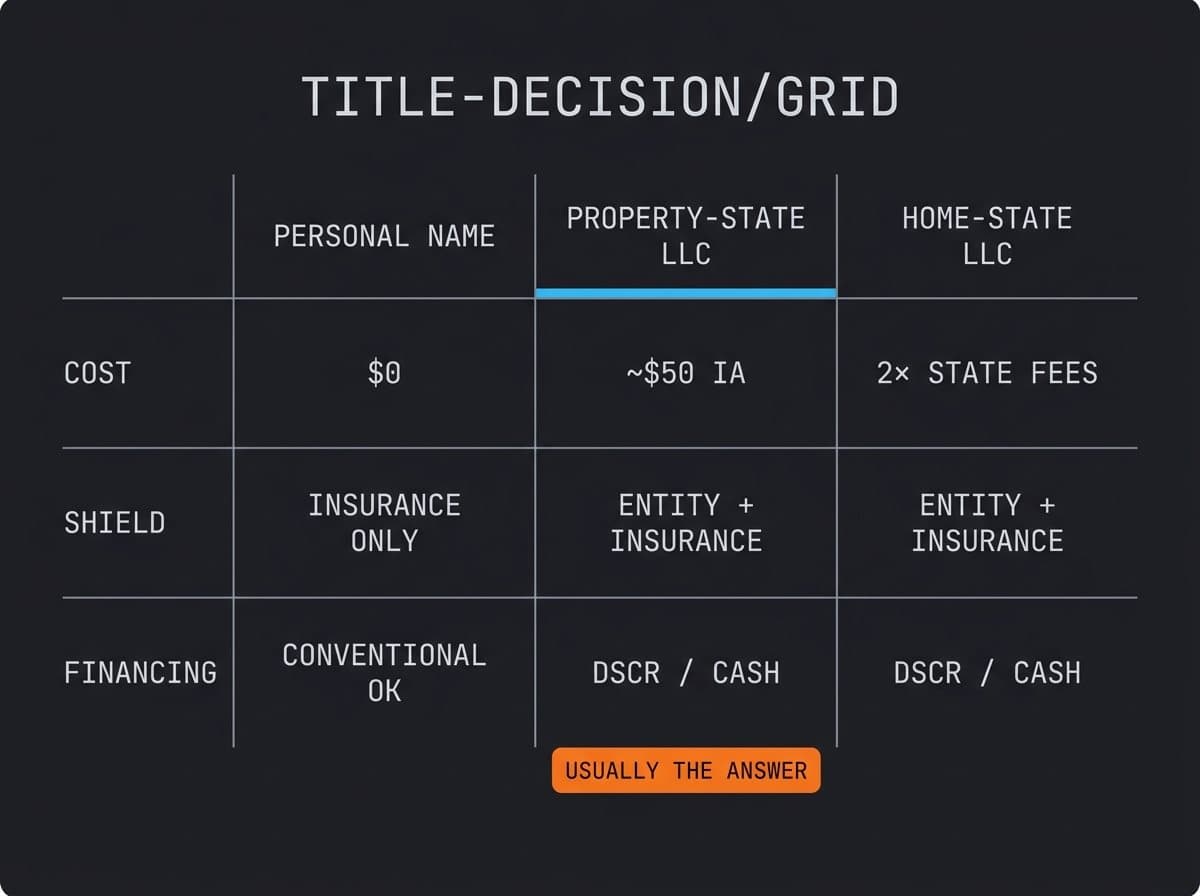
Representative costs — the table beats the guru course
The three structures, honestly
Your own name + insurance
The default for a first property, and not a reckless one: a dwelling policy with $500K liability plus an umbrella over it covers the realistic risk surface for less than an entity's annual carrying cost. The trade: your name on the public record, and no separation if a judgment ever exceeds coverage. Conventional financing works cleanly here — which matters if you're not buying cash.
An LLC in the property's state
For Iowa property, an Iowa LLC: formation around fifty dollars, light biennial reporting, no second state involved. The entity is "doing business" exactly where it's registered. This is the structurally clean version, and at Iowa costs there's little reason to get cleverer.
Your home-state LLC, foreign-registered
Forming at home feels simpler until the property state requires foreign registration — then you're paying both states forever. This mostly makes sense when an established multi-property entity already exists. Starting fresh for one Iowa rental? Form it in Iowa.
The same logic extends one more step: investors growing past a few doors sometimes use a holding-company arrangement — but that's a conversation for your attorney when the portfolio justifies it, not a starting requirement.
The operating rules that make it real
An LLC pierced is an LLC you paid for nothing. The discipline:
1. The entity buys, owns, and signs
Title in the LLC's name at closing — in a wholesale purchase, the assignment paperwork names the entity as assignee. Leases, management agreements, and vendor contracts all execute in the entity's name, signed "as member."
2. Separate money, always
An entity bank account that rents flow into and expenses flow out of. One commingled year is the plaintiff attorney's favorite exhibit.
3. Insurance follows the structure
The policy names the LLC as insured (or additional insured). A policy in your personal name on an entity-owned property is a denied-claim machine — the title and closing documents and the insurance must tell the same story.
4. Decide before the contract, not at closing
Switching the buyer mid-transaction reopens documents and, with financing, restarts approvals. Pick the structure when you start shopping.
How Pando handles this
Pando transfers close to whatever buyer you bring — personal name or entity — and the paperwork is drafted accordingly from the start, with the assignee named correctly and closing documents aligned so the title, lease, and insurance story match. What we won't do is play formation consultant: entity choice is a ten-minute conversation with your attorney and accountant, and the honest answer for a first river-town purchase is usually simpler than the internet wants it to be. [VOICE-REVIEW: confirm comfort stating "not legal advice" posture implicitly rather than with a disclaimer line.]
FAQ
Do I need an LLC for an out-of-state rental? No — insurance is the first defense either way. The entity earns its keep with real equity, multiple doors, or partners.
Home-state or property-state LLC? Property-state, almost always — otherwise you foreign-register and pay two states. Iowa formation is ~$50.
Does an LLC complicate financing? Conventional loans want personal title; entity buyers use DSCR-style lending or cash. At river-town prices, cash is common.
What pierces an LLC? Commingled funds, contracts in the wrong name, missing member signatures. Operate it like a real company or don't bother.
Next step
See how Pando papers a transfer to your structure — or request access and bring whichever buyer your attorney blesses.
See the discipline in practice.
Vetted investors get first look at every deal Pando announces — evaluation numbers, not marketing numbers.
The console has read this article. Ask for the short version, the main points, or anything it raised.


